


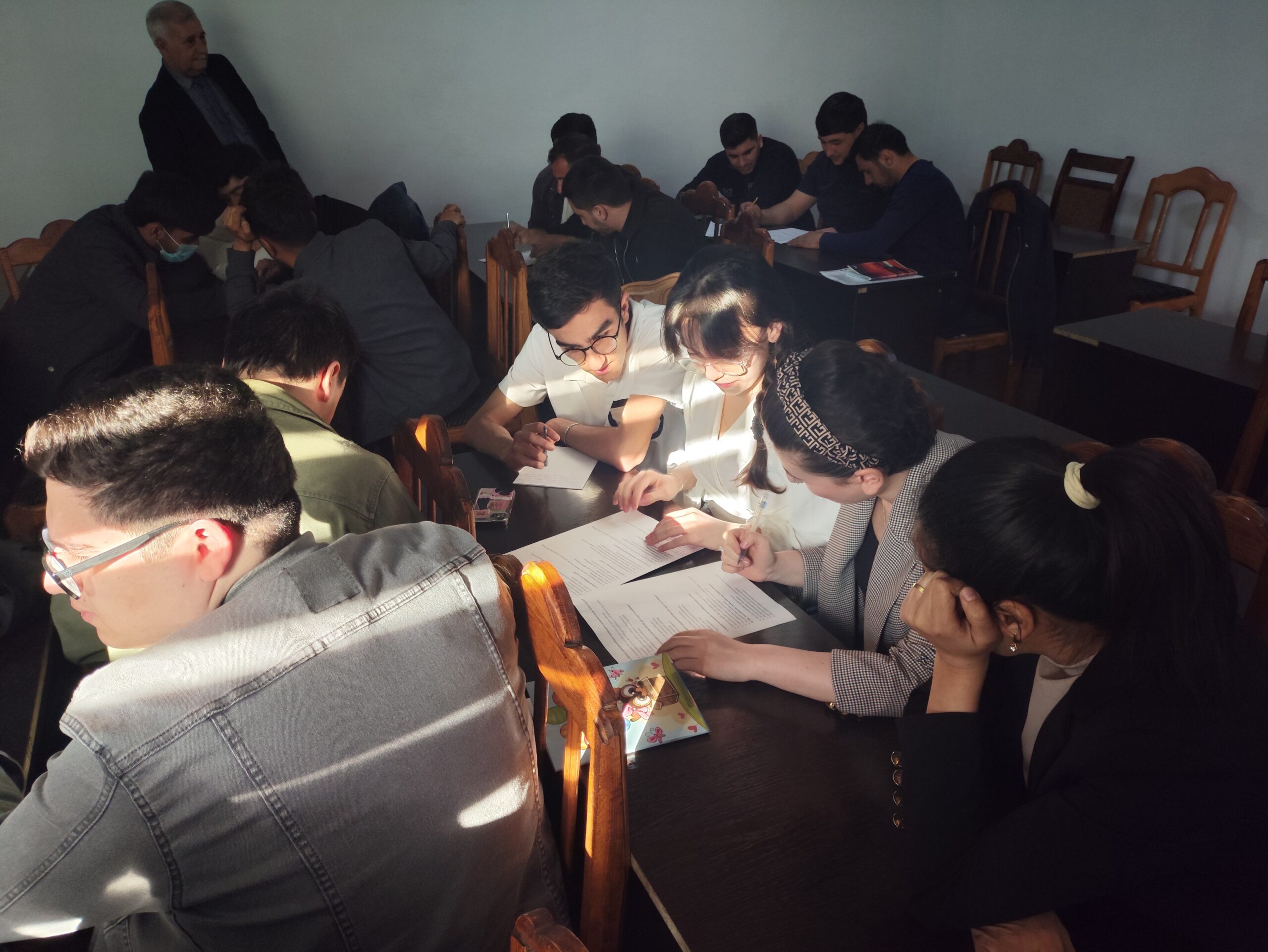


Mingachevir State University hosted a hackathon titled “Clean Energy in Agriculture” with the aim of increasing energy efficiency in the agricultural sector, promoting the use of renewable energy sources, and supporting students in developing innovative approaches in this field. The event was jointly organized by the Lifelong Learning School and the Department of Energy.
Within the framework of the hackathon, participants analyzed existing problems related to energy use in agriculture and worked on more efficient and environmentally friendly solutions. Teams developed projects focused on the use of solar and wind energy, optimization of irrigation systems in terms of energy consumption, application of alternative energy sources in agricultural equipment, and more effective resource management.
A key feature of the hackathon was that participants adapted technological and energy solutions to practical applications by taking into account the specific needs of the agricultural sector. The developed projects were based on principles of both economic efficiency and environmental sustainability, aiming not only to increase agricultural productivity but also to reduce energy costs.
During the event, participants worked intensively in teams and, within a short period, developed their ideas into applicable project models. This process had a positive impact on enhancing both their technical knowledge and their analytical and creative thinking skills.
In the final stage of the hackathon, teams presented their projects to the jury panel. The evaluation was based on criteria such as innovativeness, relevance to the agricultural sector, impact on energy efficiency, and implementation potential. The most successful projects were selected, specially recognized, and participants were provided with recommendations for their further development.
The “Clean Energy in Agriculture” hackathon is remembered as one of the significant initiatives contributing to students’ acquisition of integrated knowledge in agriculture and energy, increasing interest in green technologies, and supporting the practical application of sustainable development principles.