


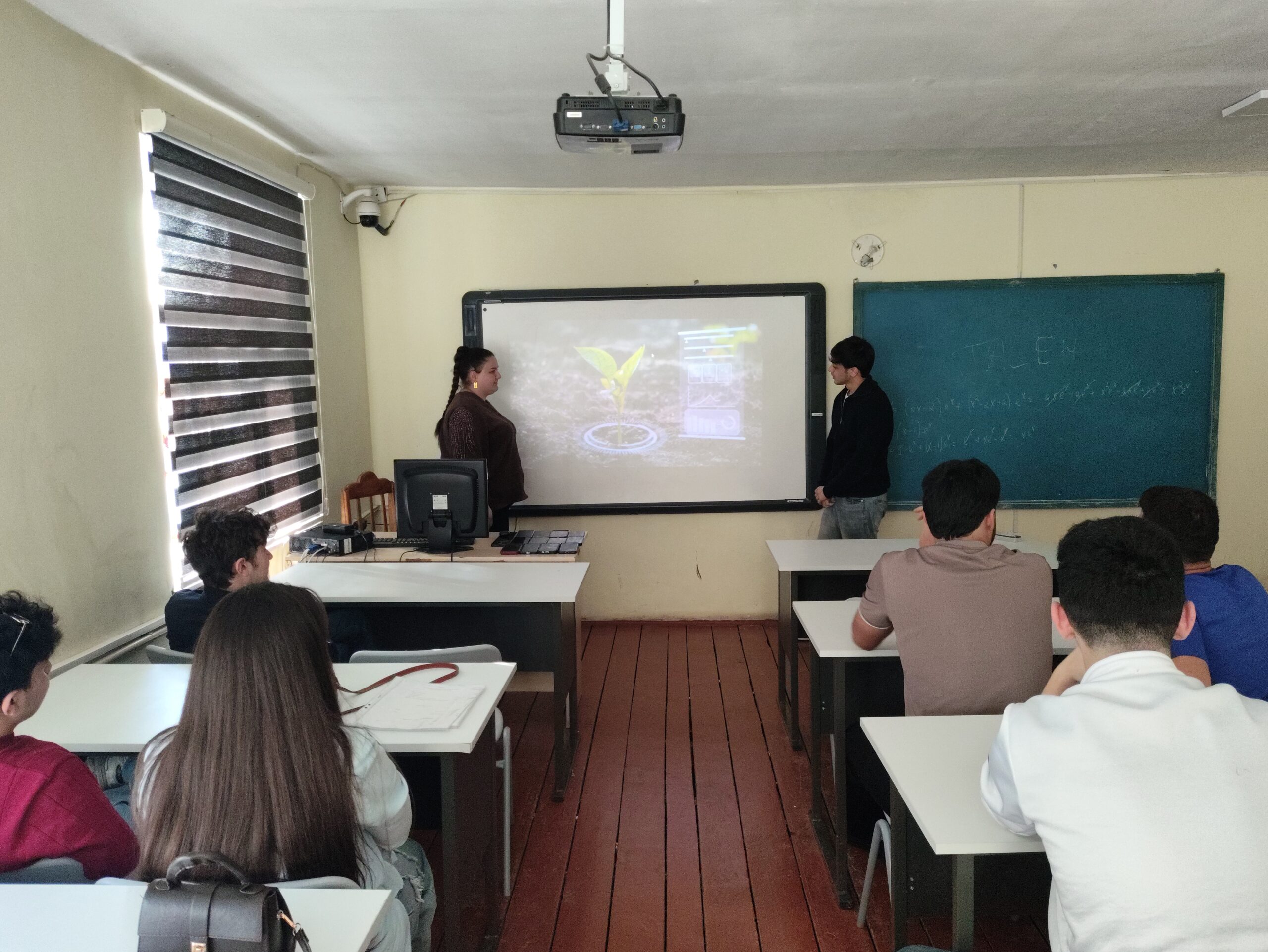



Mingachevir State University hosted the “Sustainable Food Systems” Hackathon aimed at strengthening food security, promoting efficient resource use, and maintaining ecological balance. The event was jointly organized by the Department of Natural Sciences and the Department of IT.
Within the hackathon, participants analyzed challenges in the food production and consumption chain and developed innovative approaches focused on reducing waste, improving logistical efficiency, and minimizing environmental impact. The integration of agriculture, ecological sustainability, and digital technologies was central to this process.
The projects presented by the teams included smart food tracking systems, AI-based demand-forecast models, digital platforms for managing food waste, and blockchain-based solutions ensuring transparency from production to consumption. These approaches contributed to organizing more sustainable and efficient food systems.
The main goal of the event was to enhance participants’ technological approaches to real food security challenges and strengthen their analytical thinking and systematic solution development skills. The application of multidisciplinary knowledge was emphasized.
During intensive teamwork, participants quickly transformed their ideas into functional project concepts, developing innovative thinking and practical implementation skills. The proposed solutions were evaluated based on ecological impact and economic efficiency.
In the final stage, the projects were assessed by an expert panel based on innovation, implementability, sustainability, and contribution to food security. The most successful ideas were selected, recommendations for their further development were provided, and potential implementation opportunities were discussed.
The “Sustainable Food Systems” Hackathon was recognized as an important initiative that combines students’ ecological and technological thinking, promotes the development of innovative solutions in food security, and contributes to sustainable development goals.