

By the Decree of the President of the Republic of Azerbaijan, Ilham Aliyev, dated December 6, 2016, titled “On the Approval of Strategic Roadmaps for the National Economy and Main Sectors of the Economy,” the main priority directions, activities, and targets for the country’s economic development were determined. In many areas of development, including the energy sector, the implementation period of major projects was defined up to 2030. For example, increasing the share of alternative energy sources in electricity production to 30% by 2030 was identified as a key target, and significant measures are currently being implemented in this direction.
According to Clause 2.1 of the special Order signed by President Ilham Aliyev on June 5, 2025, “On the Establishment of the Organizing Committee for the Thirteenth Session of the United Nations World Urban Forum (WUF13),” a relevant Action Plan was prepared. In line with this plan, Azerbaijan identified ensuring balanced development of the capital and regions, promoting sustainable settlements, and defining priority directions in architecture and urban planning activities as strategic socio-economic development goals aligned with the United Nations Sustainable Development Goals (SDGs). To further increase attention to this field, by Presidential Order No. 858 dated December 22, 2025, the year 2026 was declared the “Year of Urban Planning and Architecture” in Azerbaijan.
It should be noted that the period of leadership of National Leader Heydar Aliyev remains a special stage in the development of Azerbaijani urban planning and architecture. Historically, Azerbaijan has had strong urban planning traditions, and thanks to the initiative and foresight of the National Leader, important decisions were made in preserving urban systems, restoration works of architectural monuments were carried out systematically, and sustainable development in architecture and urban planning was ensured. Through the efforts and vision of Heydar Aliyev, many strategic and monumental projects were implemented in Azerbaijan. One such project was the “Azerbaijan Thermal Power Plant,” the energy giant of the Caucasus, which played a major role in the country’s economy. In the first years of Azerbaijan’s independence, this power plant supplied 60% of the republic’s electricity demand and was realized thanks to Heydar Aliyev. Remembering his visit to Mingachevir on October 20, 1981, during the launch of the first block of the power station fills me with pride.
After Azerbaijan regained its independence, urban construction and urban planning gained new dimensions, reflected vividly in the architectural solutions of monumental complexes built across the country, and this process continues today in accordance with modern standards.
From the first years of President Ilham Aliyev’s leadership, special attention has been paid to urban planning and architecture, resulting in the construction of modern architectural masterpieces in both the capital and the regions. The large-scale reconstruction and restoration works carried out in territories liberated after the 44-day Patriotic War serve as clear examples of the state’s attention to architecture and urban planning.
Within the framework of the First State Program on the Great Return, the liberated territories were declared “Green Energy” zones. In a remarkably short period, planning documents for more than 100 settlements, including 12 cities, were prepared and construction activities launched. The city of Shusha, regarded as the cultural capital and source of pride for the Azerbaijani people, has been restored while preserving its historical architectural style. New architectural examples reflecting ancient Eastern traditions and meeting modern requirements are now widely emerging across the Karabakh region.
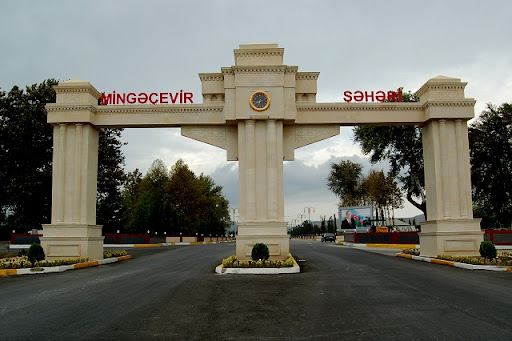
As in other parts of the country, Mingachevir is continuously being beautified through reconstruction works, construction of modern-style facilities, and creation of new parks. Attractive sites such as the “White Palace,” the “ASAN Service Complex,” and the beautifully landscaped riverside parks along the Kura River enhance the city’s charm. Mingachevir, one of Azerbaijan’s youngest settlements, officially gained city status on November 11, 1948. Remembering the individuals who contributed to the construction, development, and beautification of Mingachevir both honors their legacy and inspires younger generations.
The construction of the Hydroelectric Power Station (HPS), begun in 1945 and commissioned in 1954 as the largest power station of its time in Azerbaijan, played a crucial role in the foundation of Mingachevir. Among the city’s founders, the name of Islam Islamzade is remembered with pride and respect. An engineer by profession, he is considered one of the leading figures who laid the foundation of modern Mingachevir through his talent, dedication, and foresight.
Another notable figure was Boris Mammadov, who played an undeniable role in constructing the second bridge over the Kura River. This strategically important bridge, which still connects the right and left banks of the city as well as the eastern and western regions, remains one of his greatest contributions. He also initiated the construction of the riverside park and the city stadium.
The creation and preservation of greenery, as well as the tradition of maintaining wide and beautiful streets and parks in Mingachevir, are associated with Zuleykha Khanim, remembered as a hardworking and demanding leader. The trees that today provide shade and beauty throughout the city stand as a legacy of her dedicated efforts.
In the late 1970s, during a period of economic hardship, unused lands at the foot of barren hills were irrigated and distributed as garden plots to hardworking citizens, improving both living standards and environmental conditions. This initiative belonged to Yusif Nabiyev, who was also known for his passion for flowers and urban beautification.
Among those who contributed to the city’s cultural heritage was Mahabbat Garabaghli, who initiated and ensured the construction of monuments such as the “Mother Tongue,” “Khojaly Genocide,” and “Independence Monument.” Another respected figure, Aydin Mammadov, personally led the construction of the unusual “Ateshgah” monument in the city’s beach zone.
The people who played major roles in the construction and operation of the “Azerbaijan Thermal Power Plant,” the energy giant that gave Mingachevir its status as the “City of Lights,” also deserve recognition. Among them were construction director Suleyman Latifov, head of Azerenerji Muslum Imanov, Chairman of the City Executive Committee Vali Huseynov, director of Azerenerji Construction Rasul Hamidov, his deputy Baba Eyubov, and head of the Mingachevir Installation Department Mastan Jafarov.
The article concludes that thanks to the efforts of these individuals, Mingachevir today is a city adorned with beautiful architecture, valuable infrastructure, spacious parks, and modern facilities. The continuation of this tradition ensures that the city keeps developing in line with modern architectural and urban planning standards.
Author:
Abulfat Adilov
Member of the Azerbaijan Writers’ Union and Lecturer at Mingachevir State University