


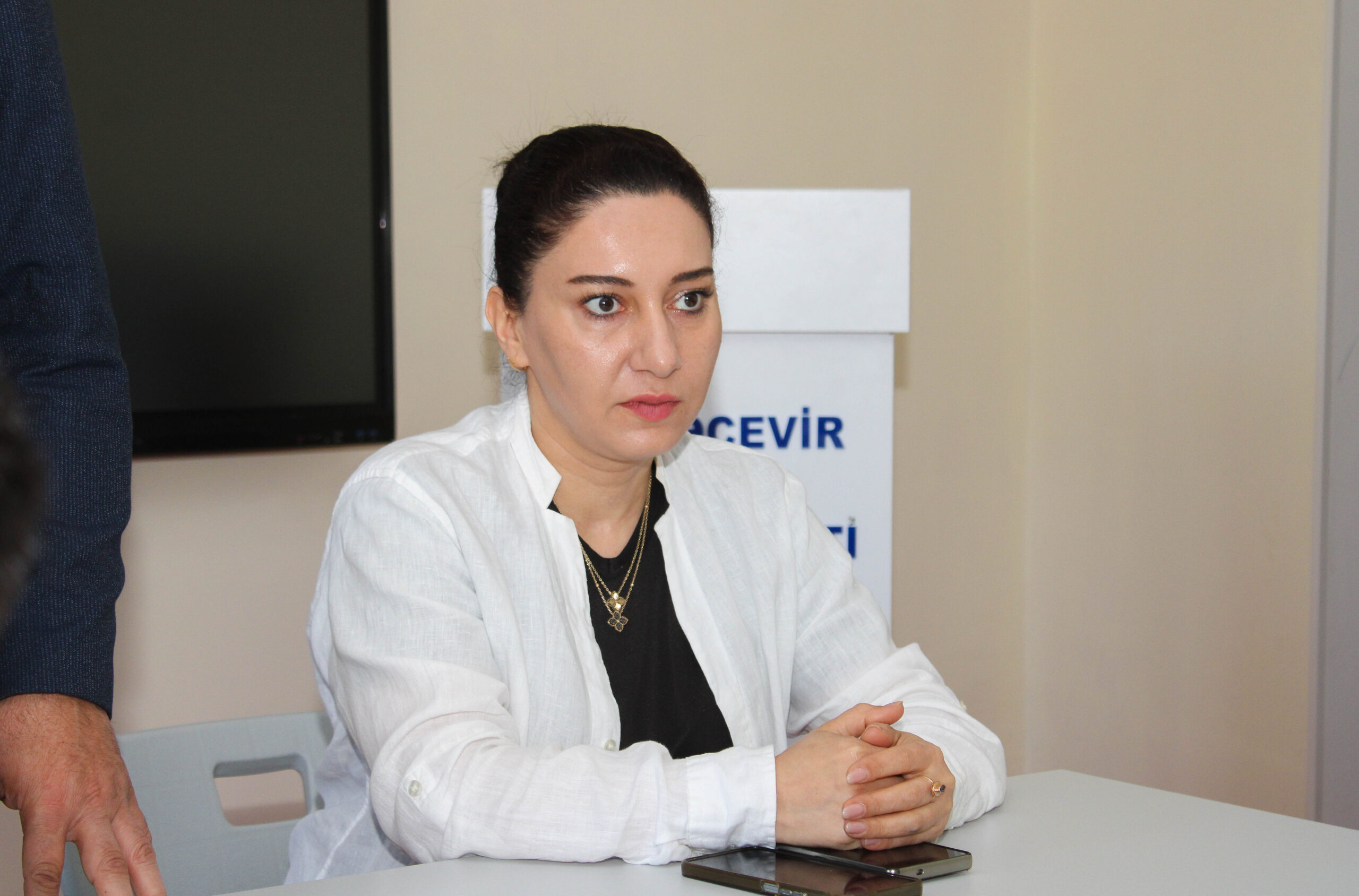


The event was organized at the initiative of the university and featured political analyst İnqilab Şirinli as a guest speaker. The session aimed to inform students about security challenges in the modern information environment and to promote effective ways of combating fake information.
During the event, the speaker emphasized that in the modern era, information has become a strategic resource and that the rapid development of digital technologies has had a profound impact on all areas of society. It was noted that the widespread use of social media and the expansion of global communication opportunities have both enriched the information environment and exposed it to new risks and threats. In this context, ensuring access to accurate and reliable information has become increasingly important.
Within the framework of the session, the importance of improving media literacy was thoroughly explained. Students were introduced to practical skills such as verifying sources, fact-checking, and identifying manipulative content. In addition, detailed information was provided on the use of artificial intelligence-based filtering systems and the operating principles of analysis tools designed to detect deepfake technologies.
Discussions also focused on the main threats faced by modern media, including cyberattacks, disinformation campaigns, and the spread of fake news. Methods of protection against such threats, as well as necessary measures to ensure information security at both individual and institutional levels, were explained, and students’ questions were comprehensively addressed.
It was highlighted that information warfare has become one of the main instruments of modern geopolitical conflicts. Reference was also made to international experience, noting that organizations such as NATO and the European Union have developed specific strategies to counter disinformation.
In conclusion, it was emphasized that information security is one of the key pillars of stability for both states and societies in the modern world. Being vigilant against fake information, critically analyzing it, and actively combating it is the responsibility of every individual. Achieving success in this field requires coordinated action between state policy and individual responsibility as a unified system.
The session was met with great interest by students, conducted in an interactive format, and included detailed answers to numerous questions. It was noted that such educational initiatives play a significant role in enhancing media literacy among young people and in fostering a healthy information environment.