


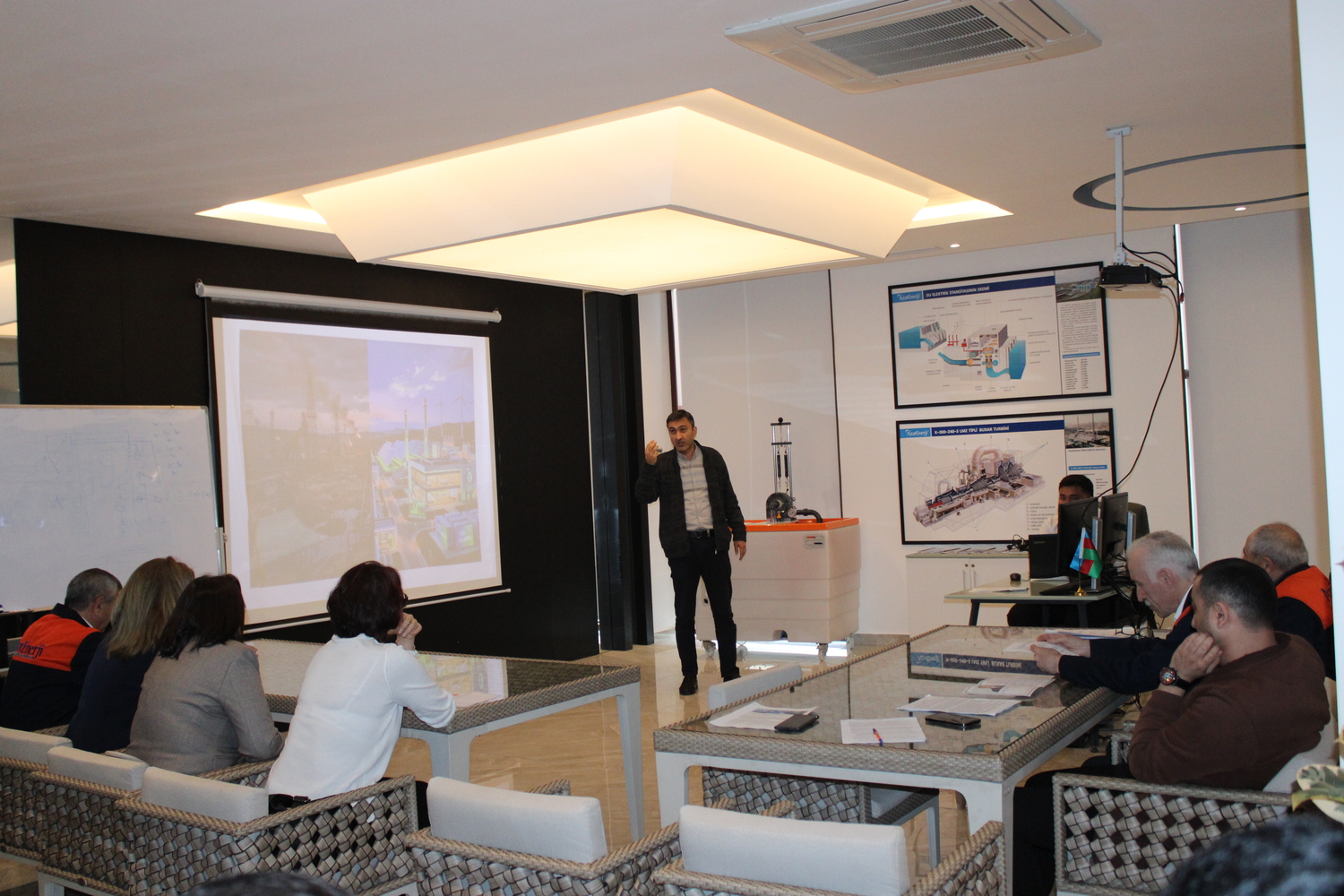


Mingachevir State University has hosted a practical masterclass titled “Future Energy: Development of an Innovative Energy Cluster” within the framework of “science–education–industry” collaboration.
The event was jointly organized by the University’s Department of Science and Innovations, the Faculty of Engineering, and the Department of Energy in cooperation with “Azerbaijan TPP” LLC. The masterclass contributed to strengthening university–industry collaboration and enhancing students’ practical competencies alongside their theoretical knowledge.
Opening the event, Dean of the Faculty of Engineering Almaz Aliyeva emphasized the importance of such initiatives in supporting students’ professional development and equipping them with skills relevant to real industrial environments.
During the masterclass, specialists from “Azerbaijan TPP” LLC delivered comprehensive presentations on key areas of the modern energy sector. The discussions covered increasing energy efficiency in thermal power plants, integration of conventional and renewable energy sources, environmental challenges and carbon emission reduction, digitalization of energy systems and the application of artificial intelligence, as well as energy security and resource optimization.
Participants were provided with detailed insights into innovative technologies, current trends in the energy sector, and the practical outcomes of ongoing scientific research. They also had the opportunity to engage with experts, ask questions, and exchange ideas.
At the end of the event, Head of the Department of Energy Kamala Ayyubova expressed her gratitude to the organizers and invited experts, highlighting that such masterclasses play a vital role in reinforcing theoretical knowledge through practical experience.
The event was attended by representatives of the university administration, academic staff, students, and industry professionals.
It should be noted that initiatives carried out at Mingachevir State University within the framework of “science–education–industry” collaboration make a significant contribution to developing students’ practical skills, fostering innovative thinking, and preparing future engineering professionals.