

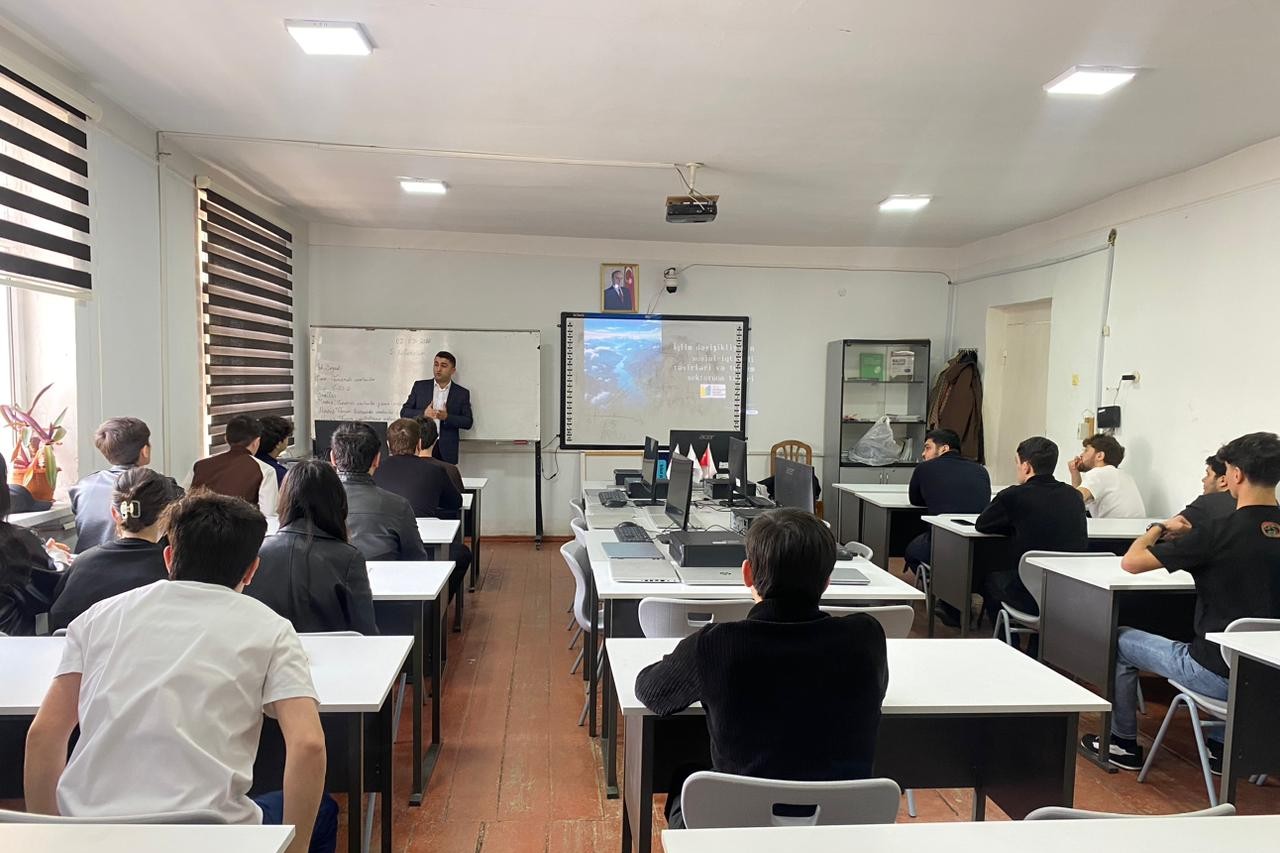

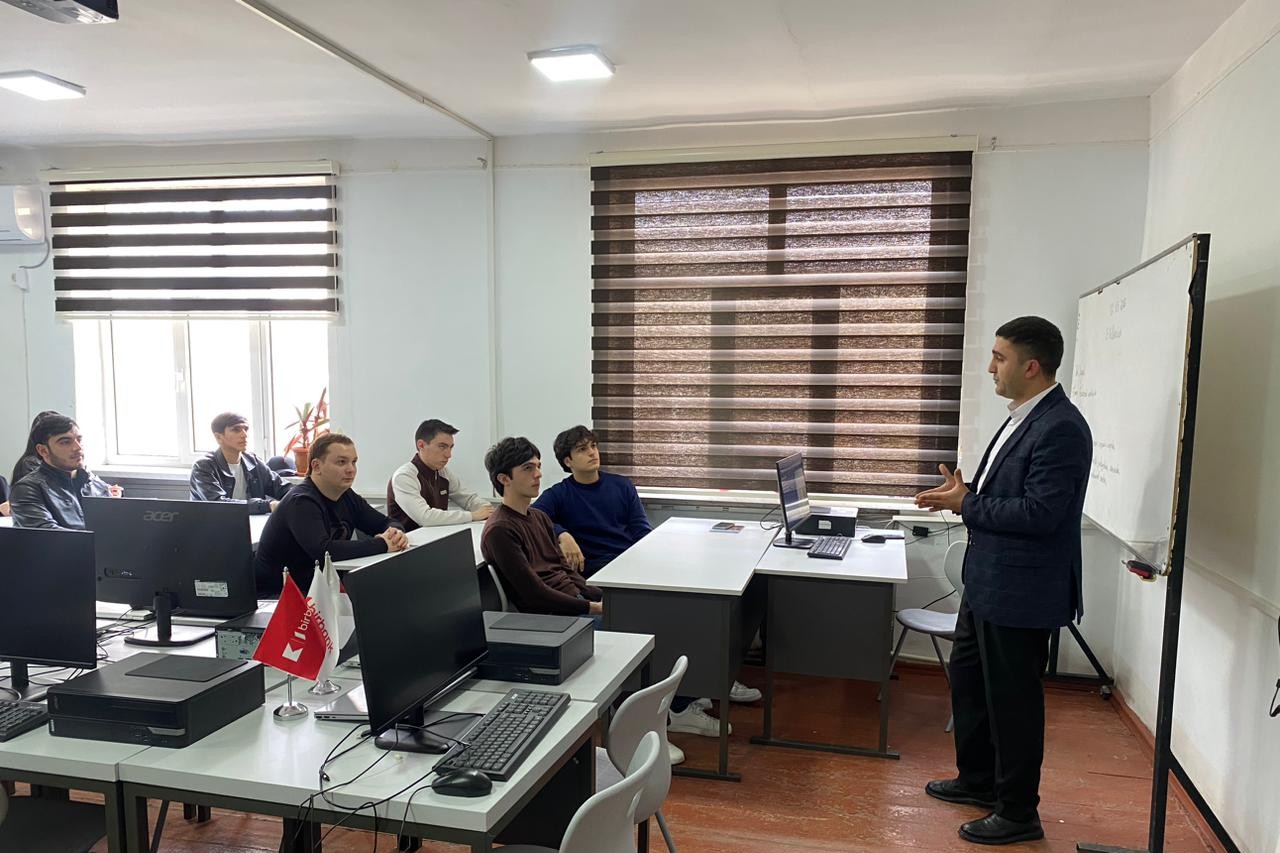
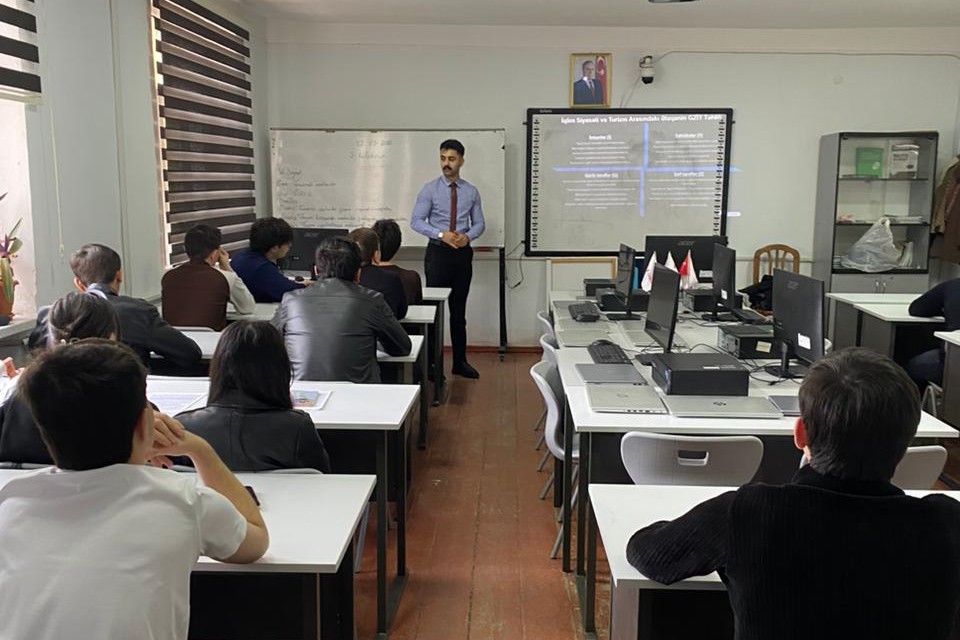
A training titled “Socio-Economic Impacts of Climate Change and Its Effects on the Tourism Sector” was organized at Mingachevir State University. The event brought together members of the university’s academic staff, students, and young people studying tourism, who gained extensive information about the social, economic, and tourism-related impacts of climate change.
During the training, lecturers of the Department of Economics, Rashad Huseynzade and Kenan Abbasov, delivered presentations on the topic and created an active discussion environment with the audience.
During the training, the concept of climate change, the process of global warming, and the changes in the climate system caused by rising temperatures were explained. It was noted that the increase in the average temperature of the Earth’s surface over the past century has led to the melting of glaciers, rising sea levels, and the intensification of droughts and floods. According to scientists, the rapid warming observed over the last 150 years is mainly caused by anthropogenic factors, that is, human activities.
In the presentations, attention was drawn to the carbon footprint of industry and energy production, the use of fossil fuels, transportation, and particularly the tourism sector. It was highlighted that aviation and cruise tourism generate high levels of emissions, while mass tourism increases energy and water consumption, placing additional pressure on the environment. At the same time, natural factors such as volcanic eruptions and solar activity also influence the climate, but it was emphasized that the main driver of current global warming is human activity.
Within the framework of the training, the social impacts of climate change were discussed, including increasing migration processes, the emergence of climate refugees, rising health risks, and the deepening of social inequality. Among the economic impacts, special attention was given to the decline in agricultural productivity, weakening food security, damage to infrastructure, and the additional financial burden on state budgets.
In the context of the tourism sector, the sensitivity of different types of tourism to climate change was explained. It was noted that coastal and beach tourism faces risks such as coastal erosion and rising sea levels, winter tourism is affected by reduced snow cover and shorter seasons, and ecotourism and mountain tourism are threatened by forest fires and the loss of biodiversity.
The training also provided detailed information on the concept of sustainable tourism and its main principles—environmental responsibility, social equity, and economic sustainability. The importance of implementing measures such as green hotels, ecological certifications, energy efficiency, water-saving systems, and waste reduction in the tourism sector was emphasized. It was also noted that seasonal diversification plays an important role in ensuring year-round sustainability of tourism revenues.
At the same time, special attention was given to the role and responsibility of tour guides. It was emphasized that a guide is not only a source of information but also a key figure in promoting environmental awareness among tourists and playing an active role in risk management.
The training continued in an interactive discussion format, participants’ questions were answered, and it was noted that adapting to climate change and transitioning to a sustainable tourism model could significantly contribute to the competitive and environmentally responsible development of Azerbaijan’s tourism sector in the future.