

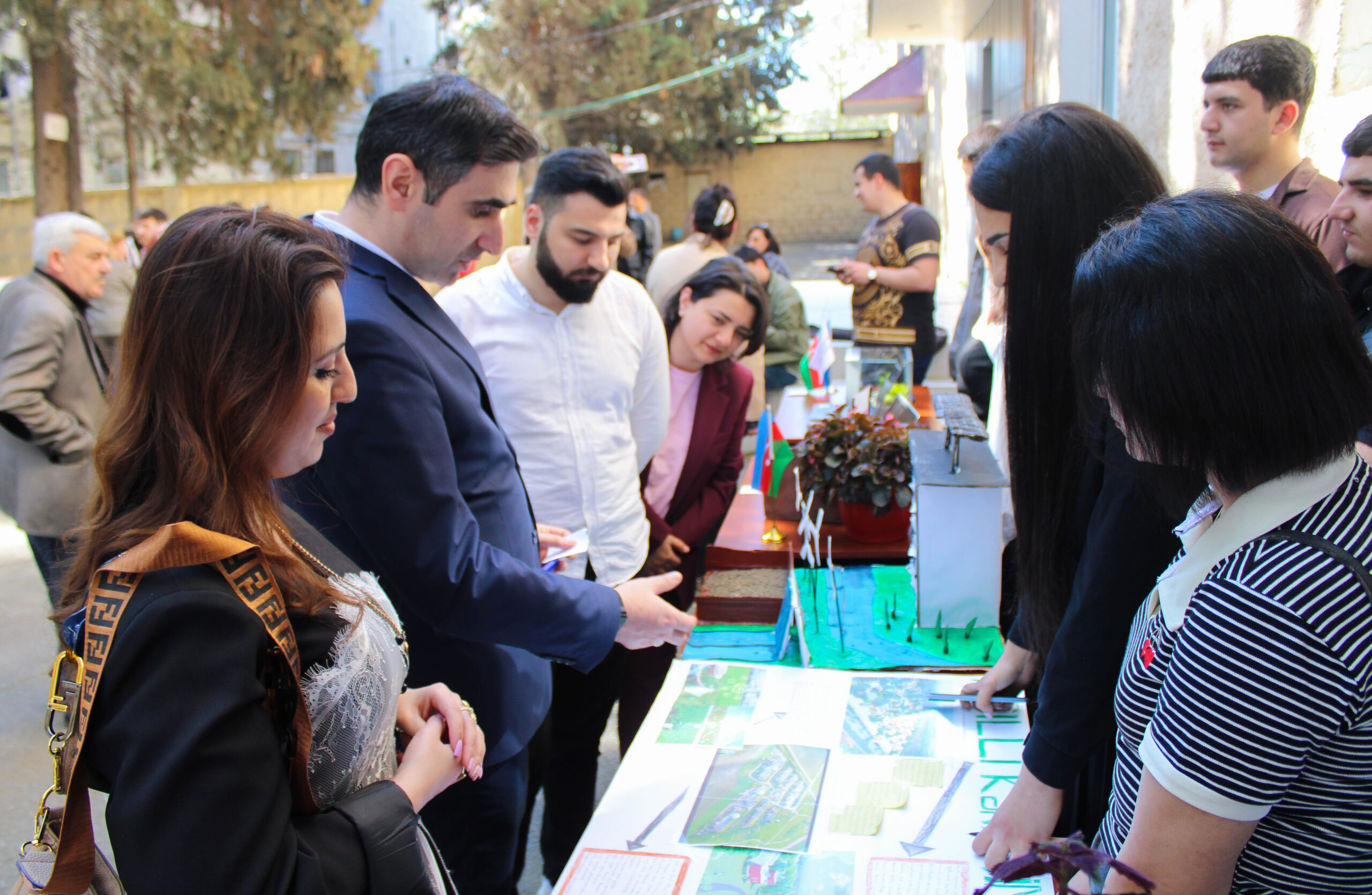
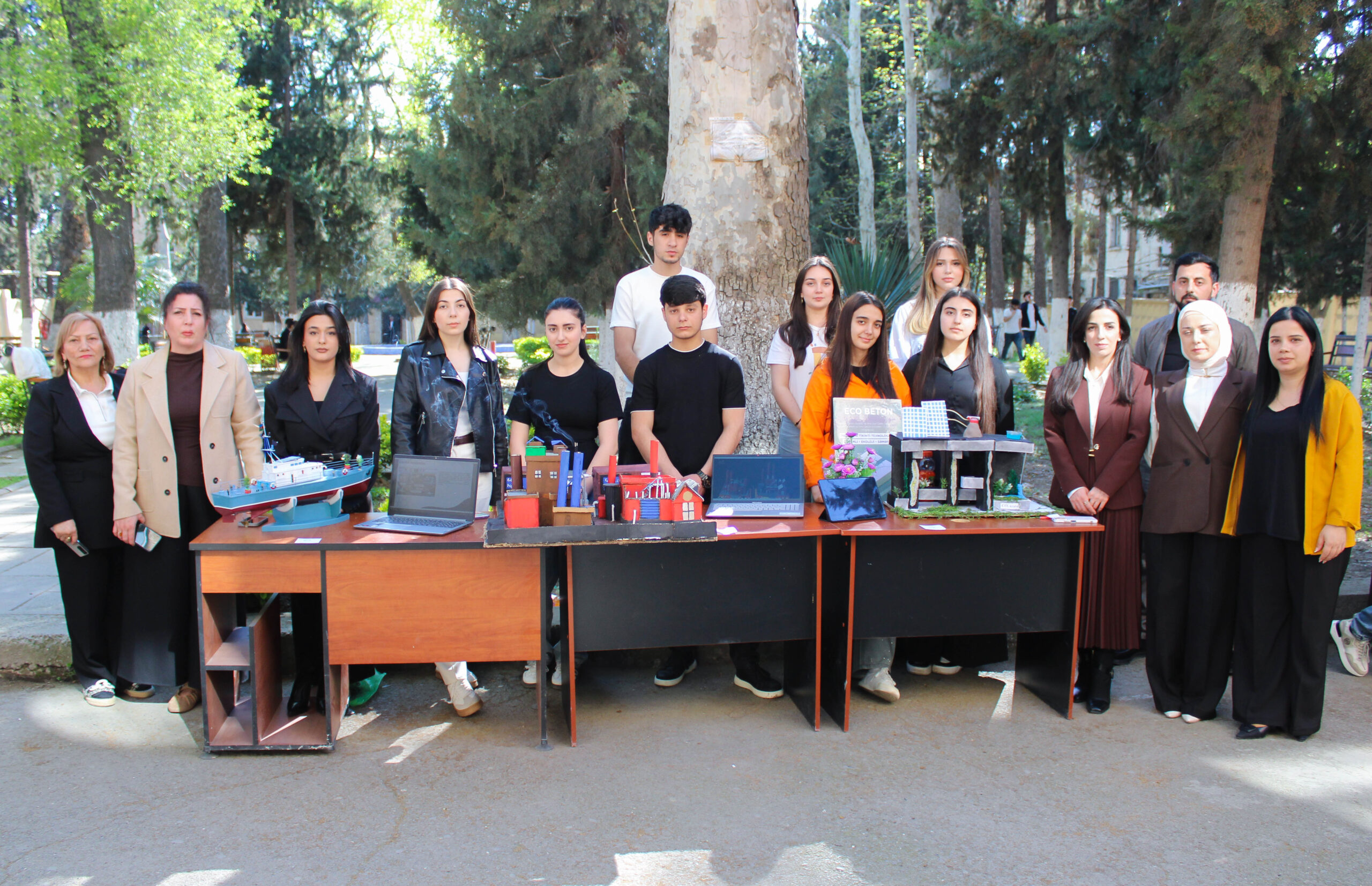
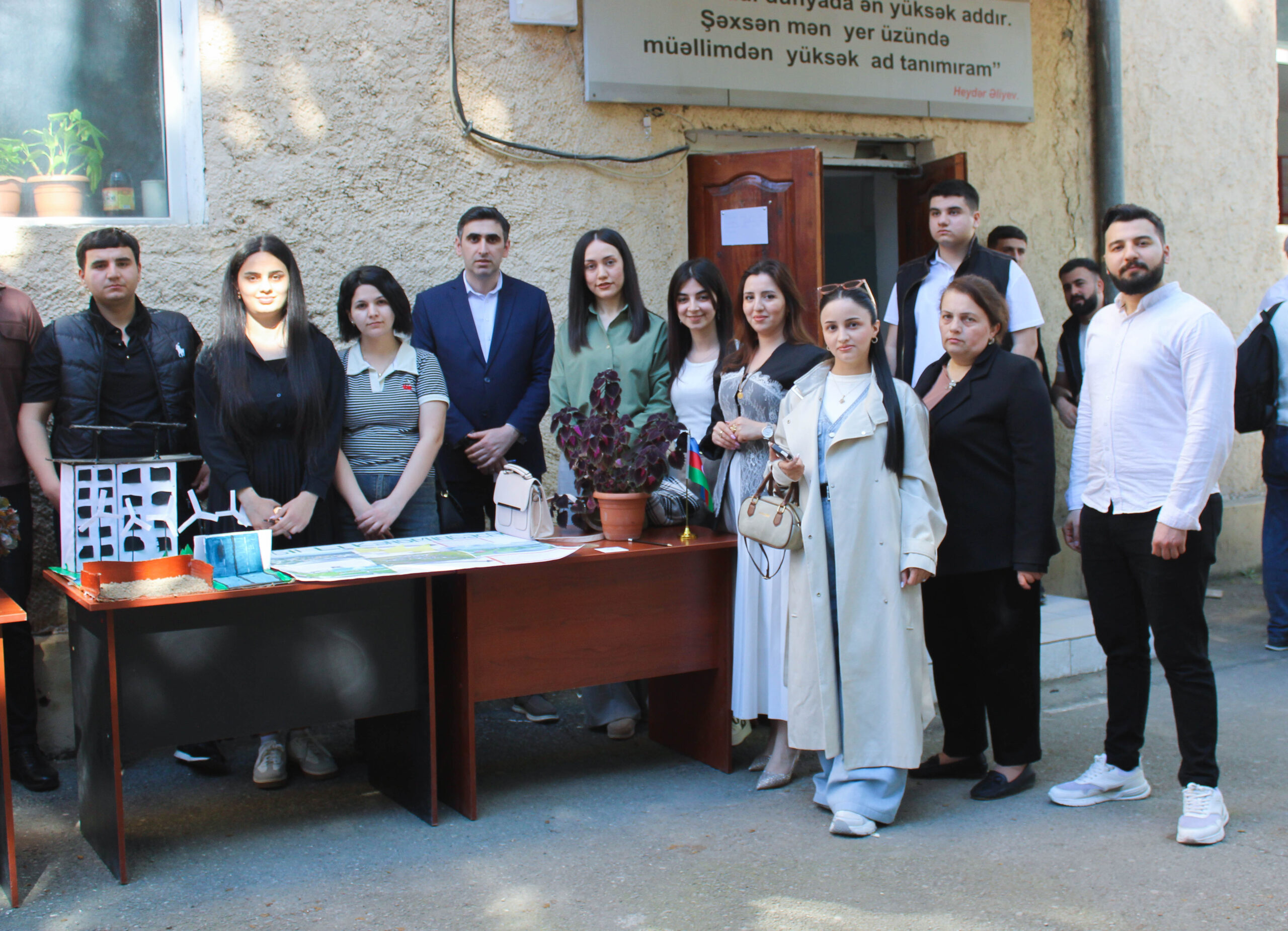
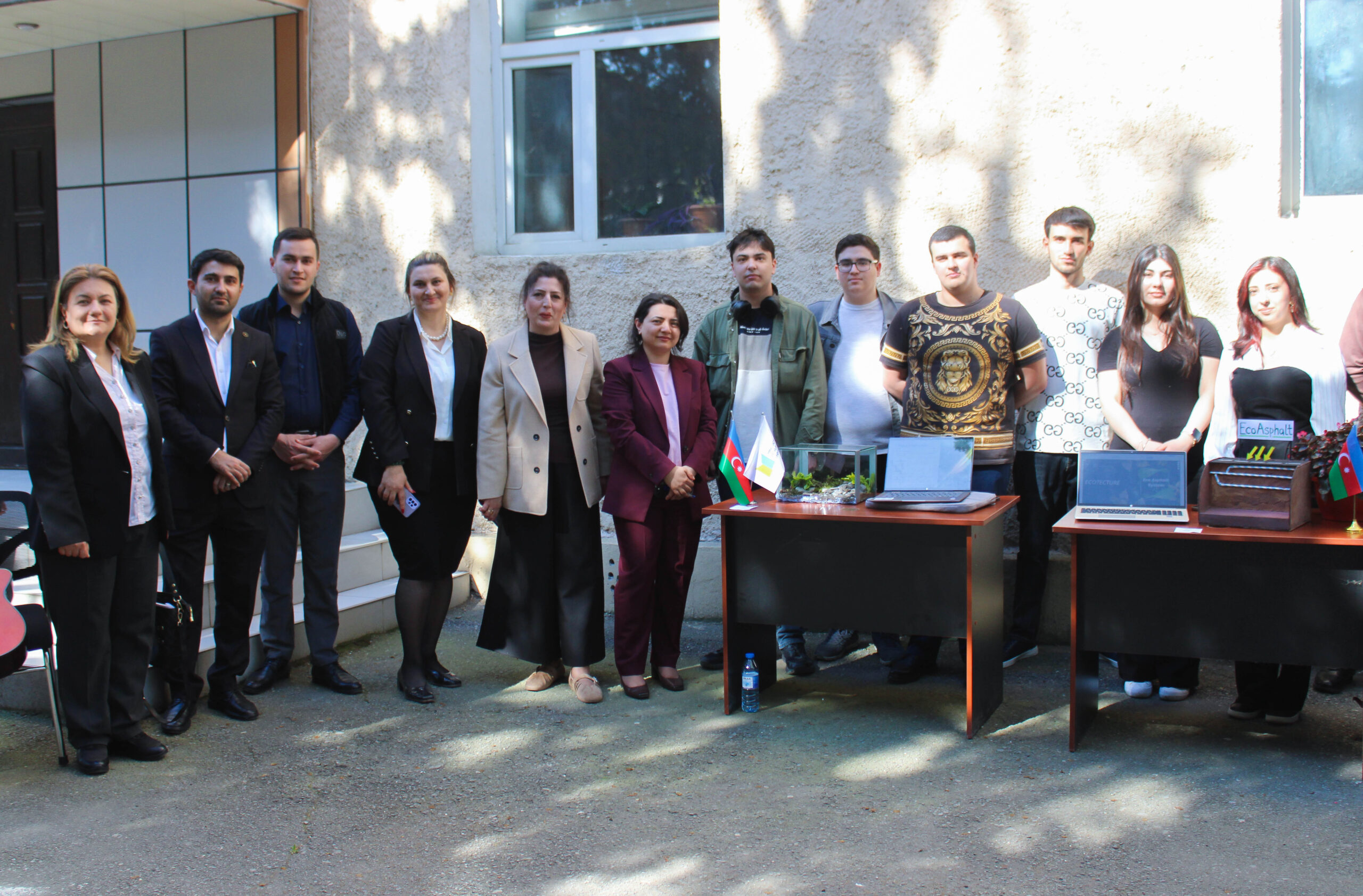
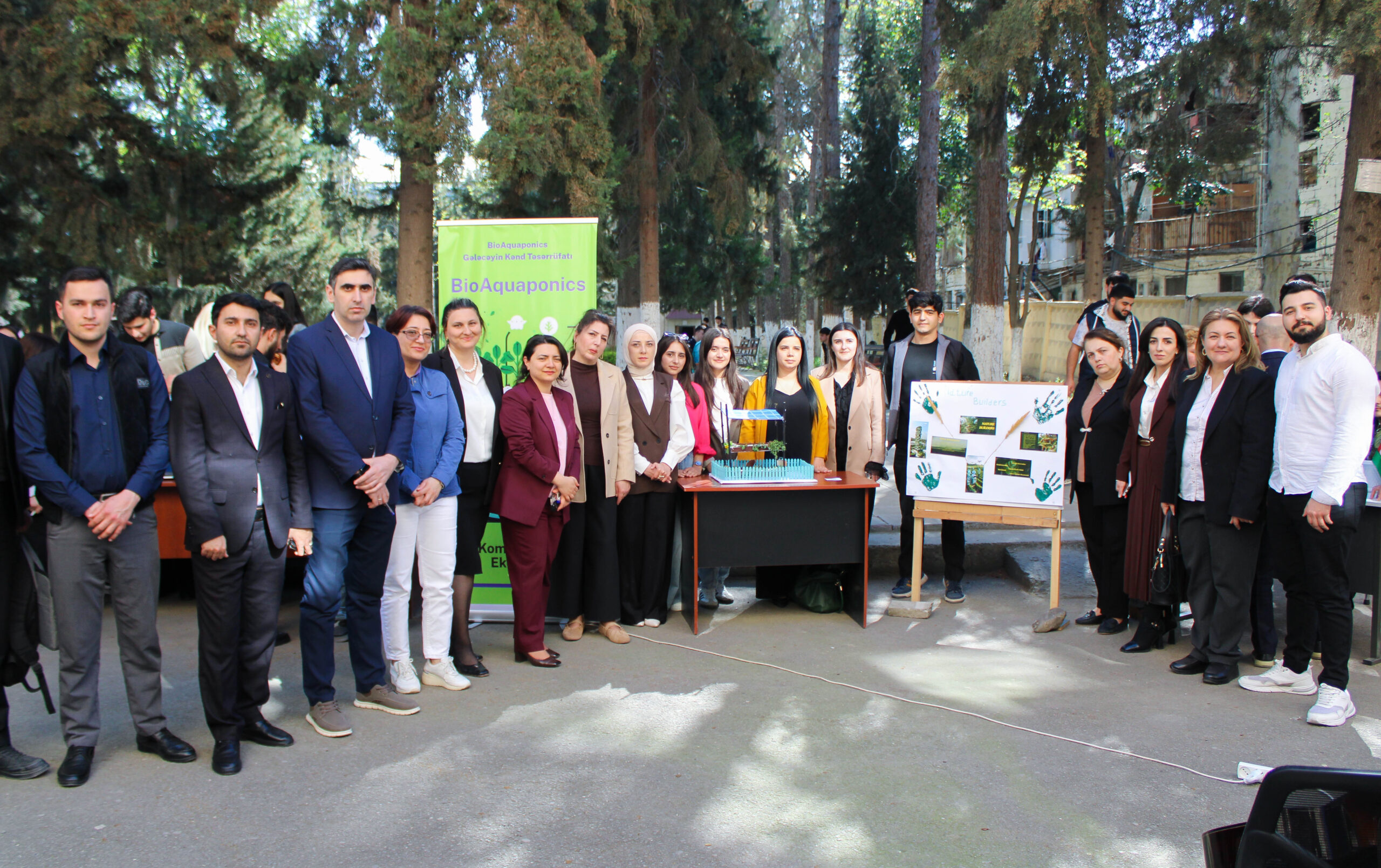
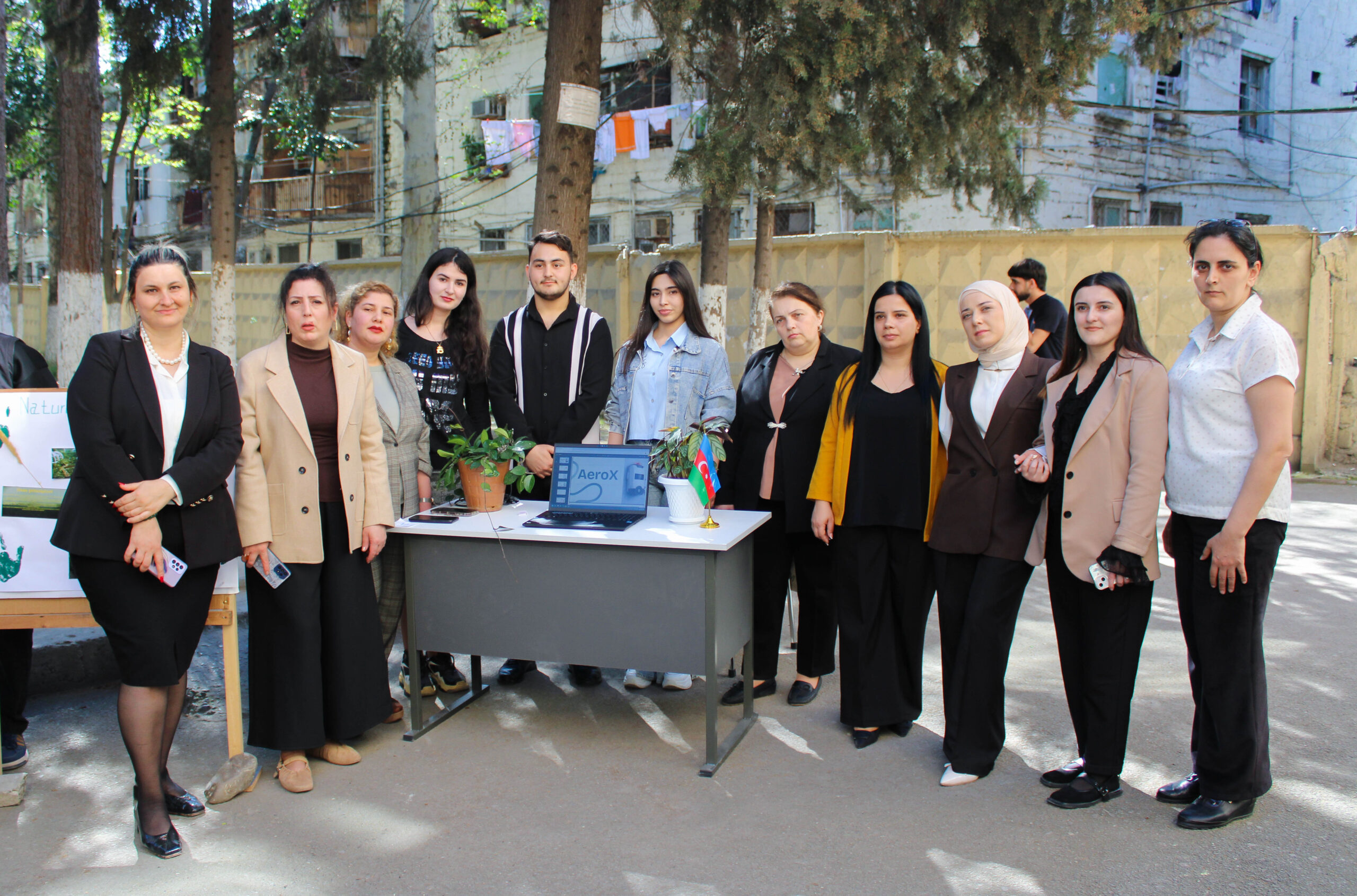
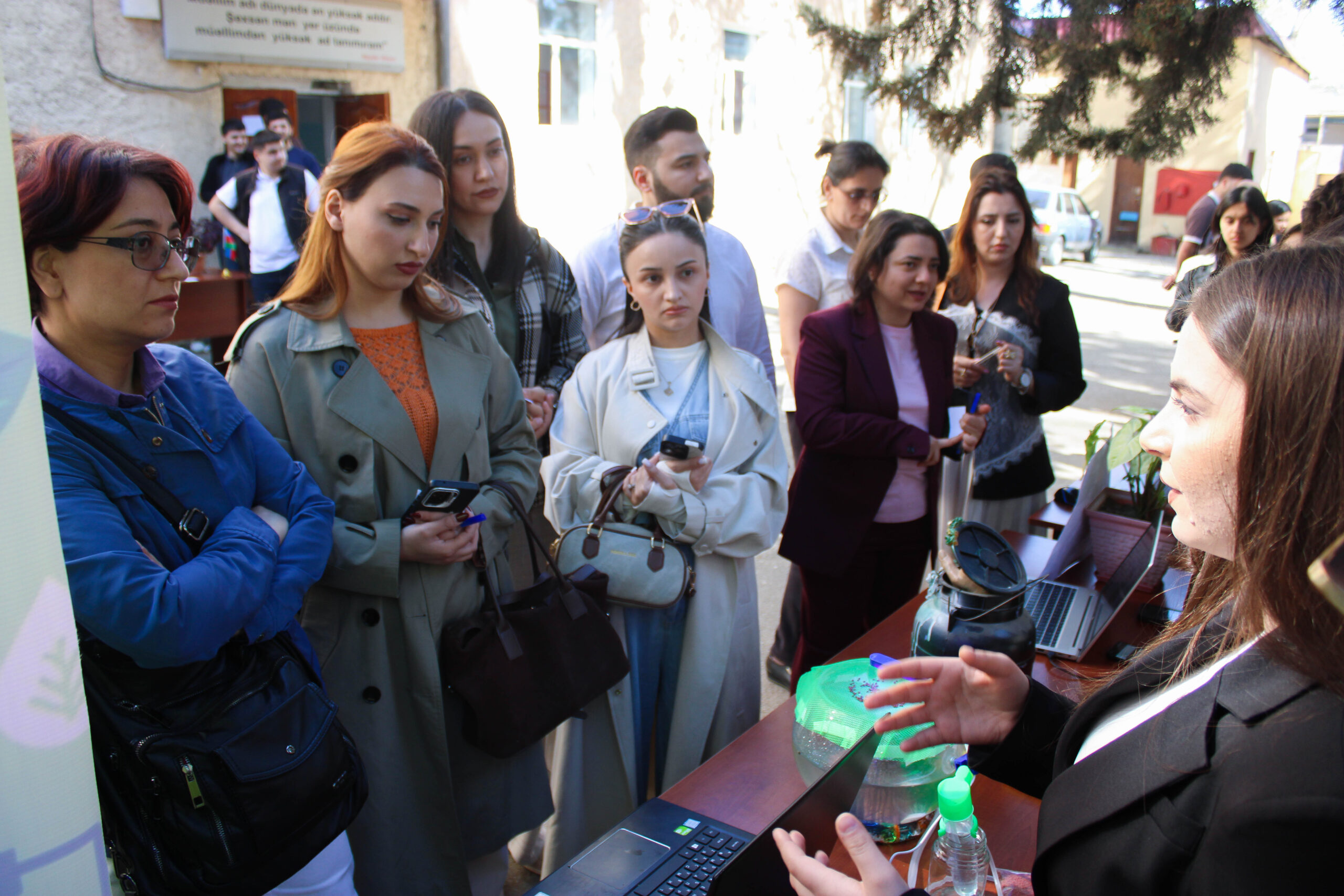
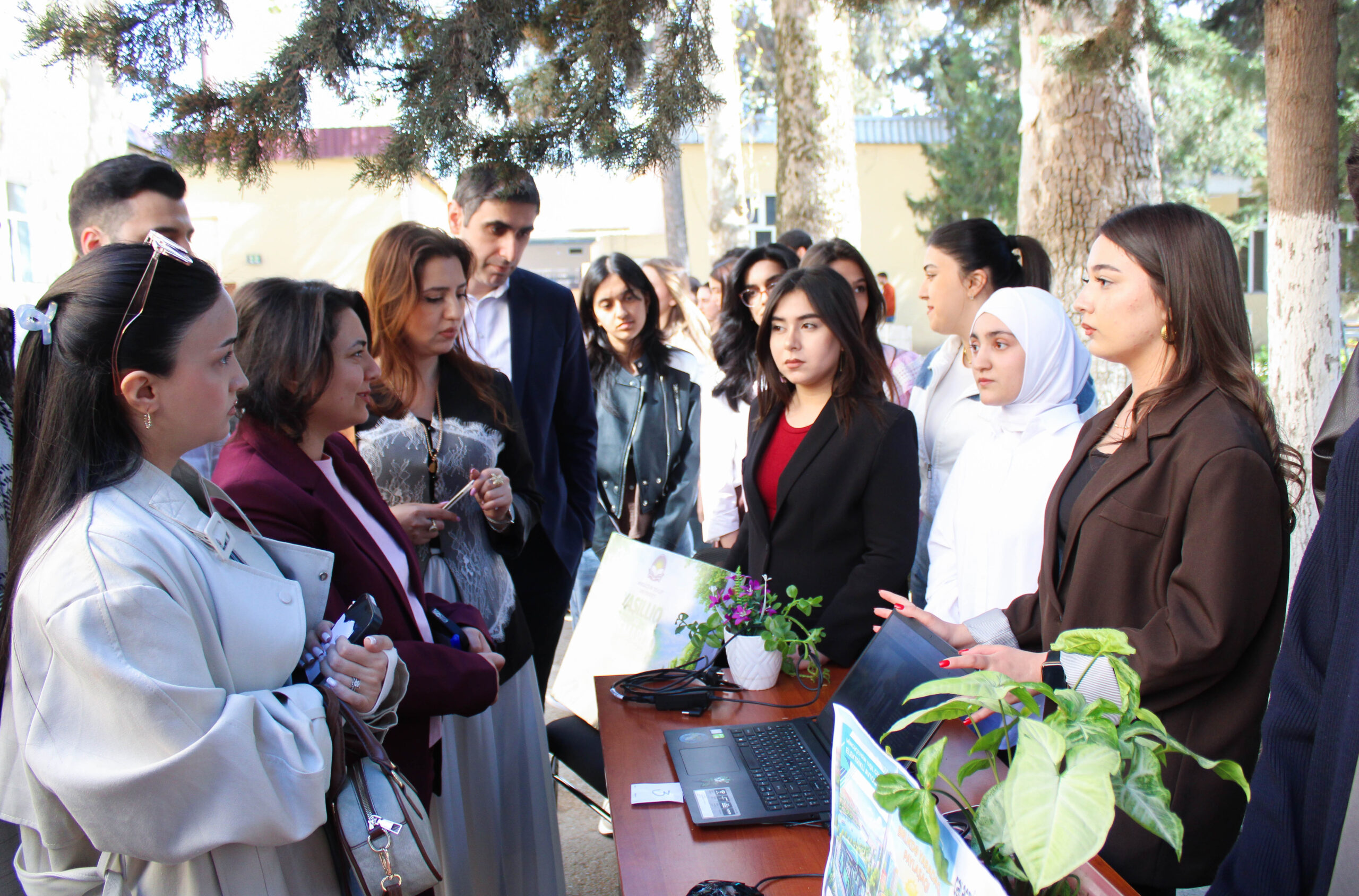
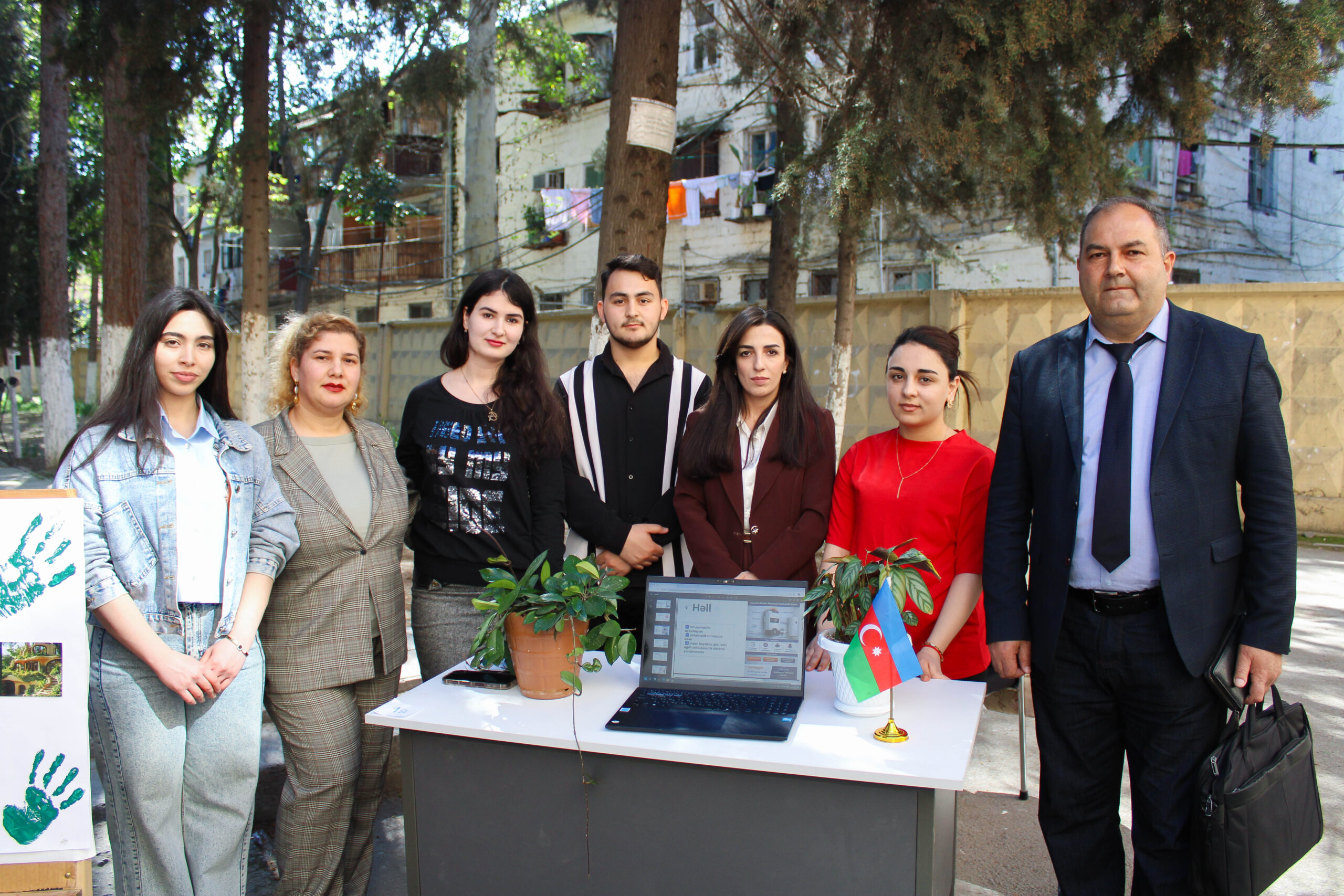
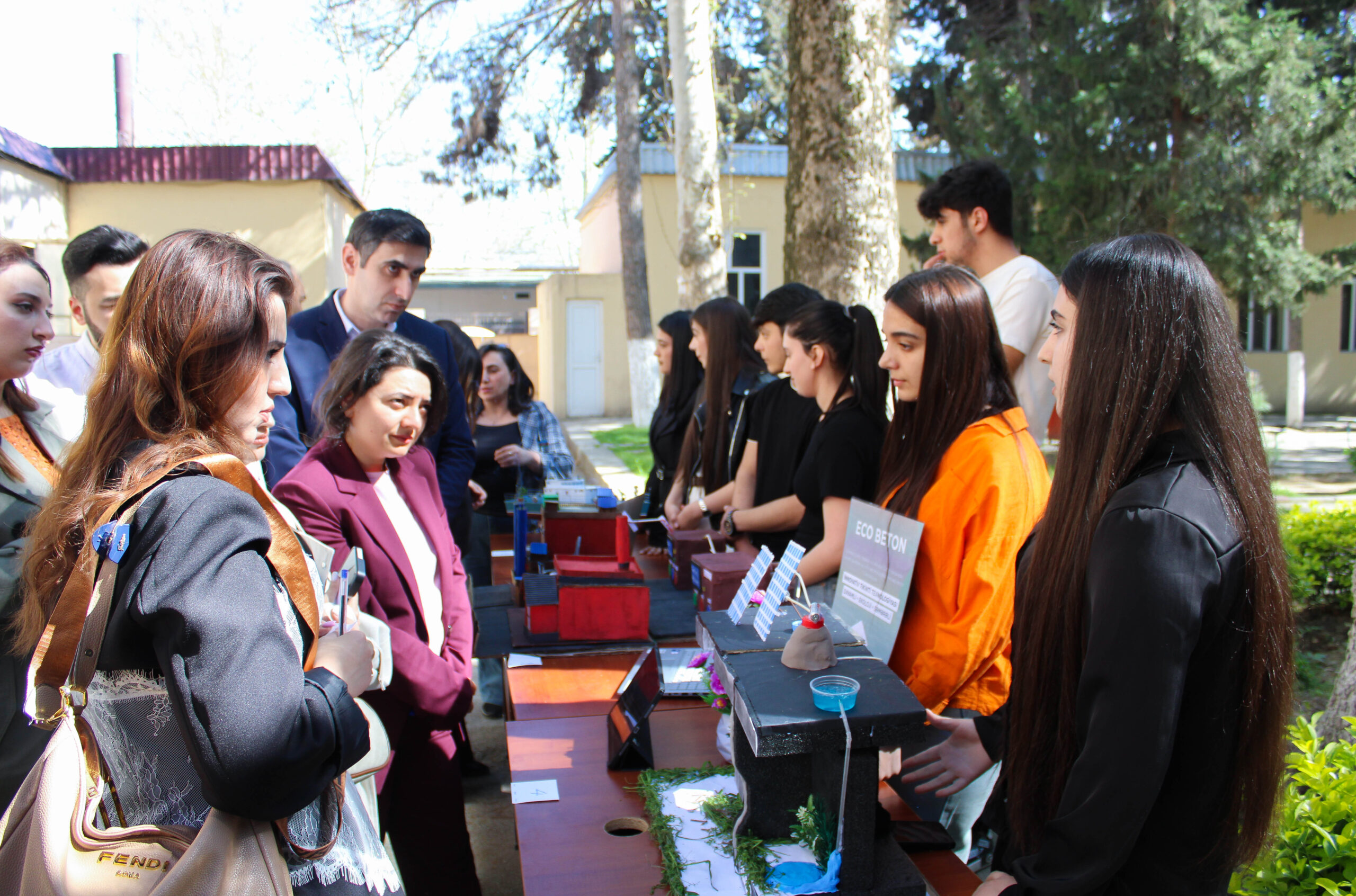
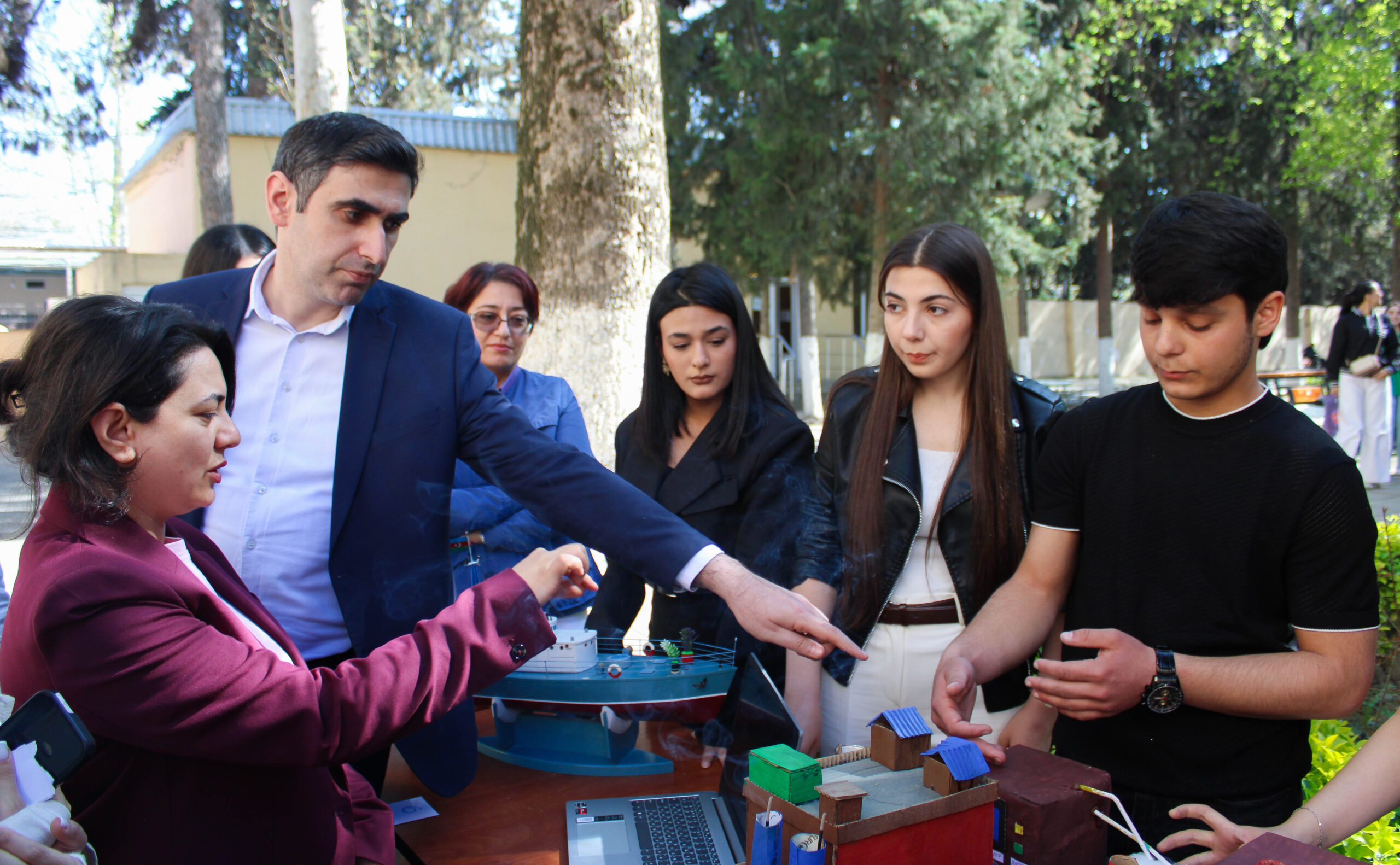
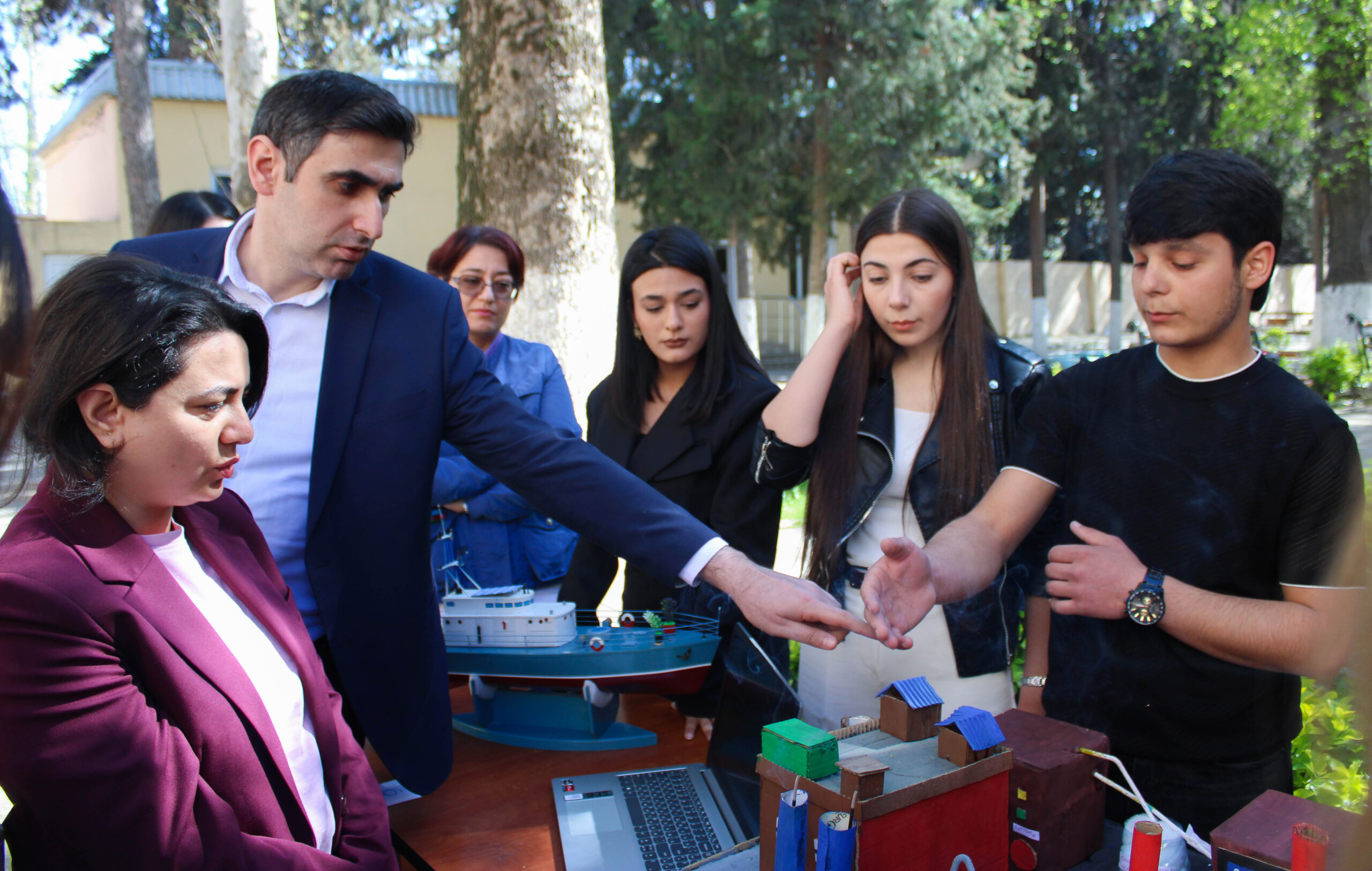
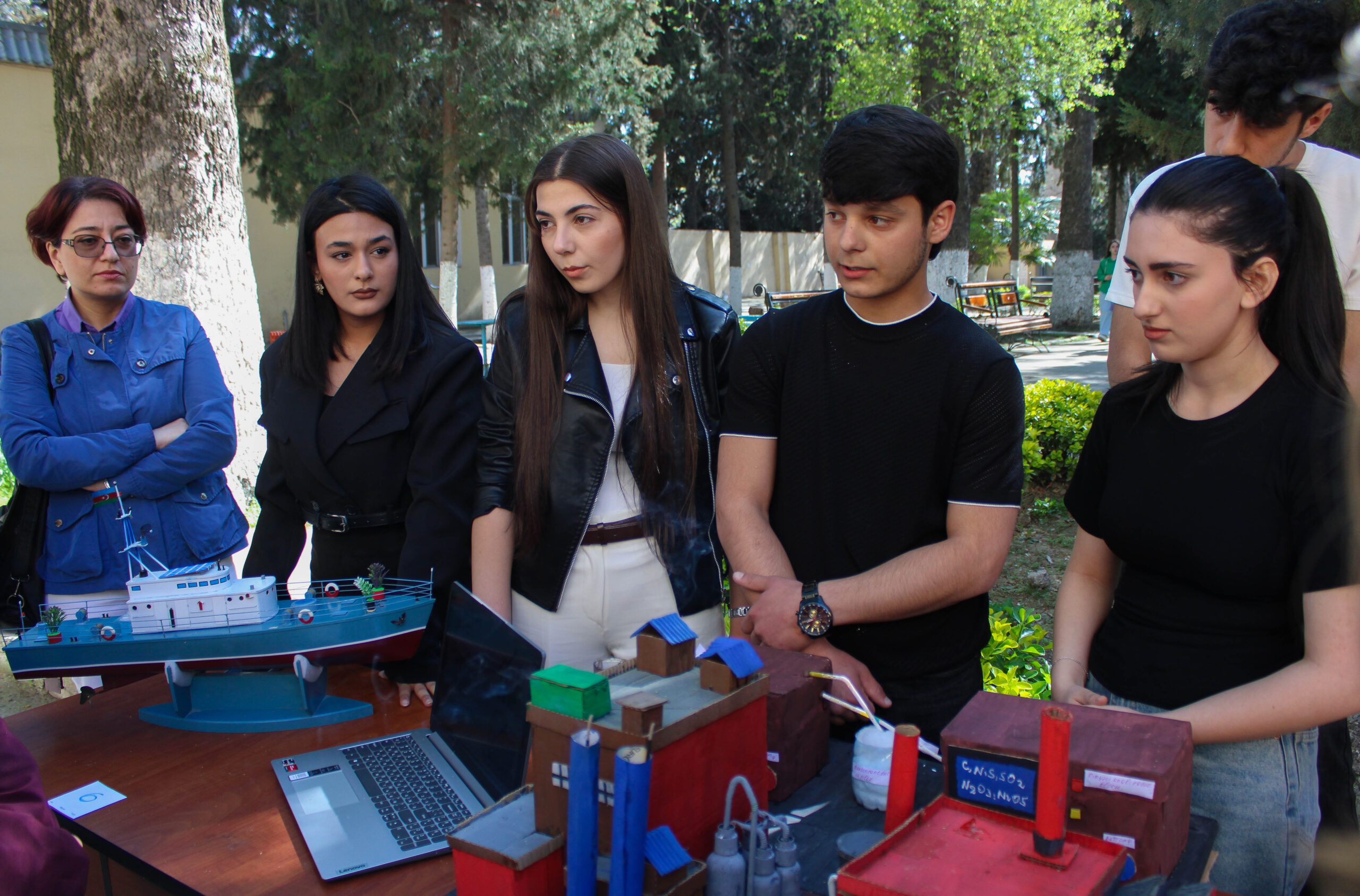
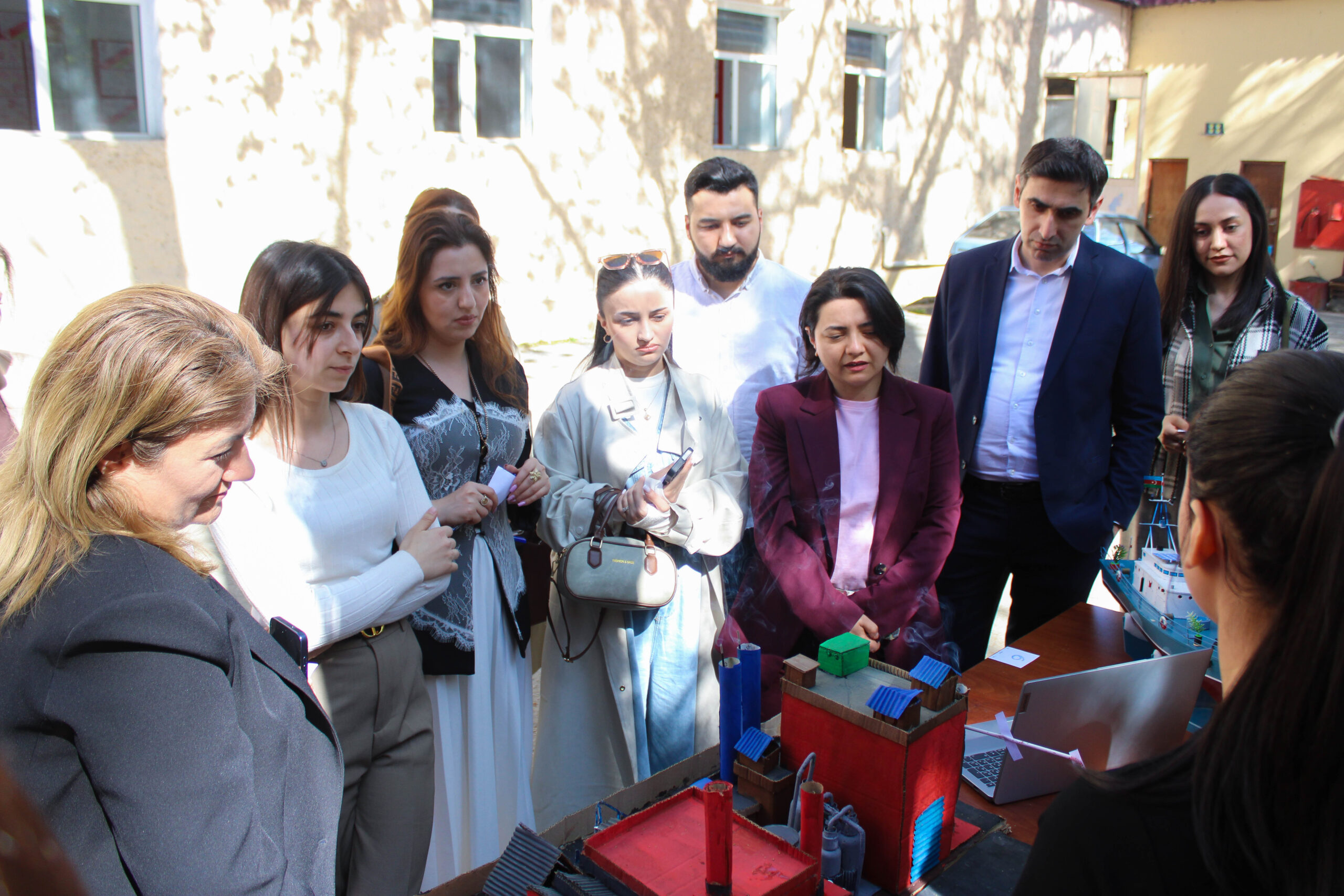
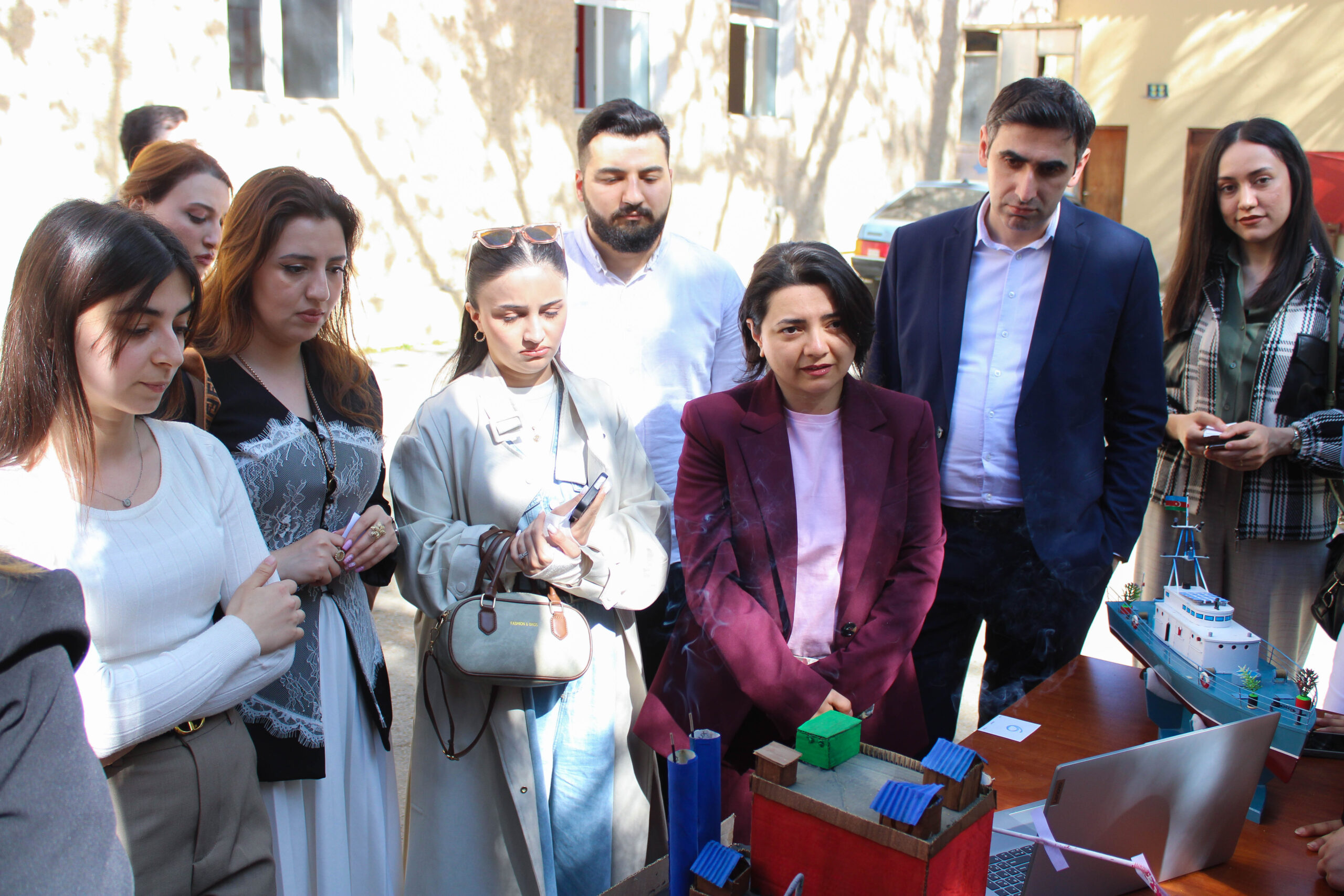
At Mingachevir State University, the event “Climate Week: Addressing Climate Change for a Sustainable Future” was successfully held. As part of the program, various models, posters, and other visual materials were exhibited based on projects developed by students of the Ecology and Environmental Engineering programs.
During the exhibition, students presented their scientific and practical approaches to the ecological and social impacts of climate change, principles of sustainable development, efficient resource use, and environmental protection. The works not only reflected the relevance of the topic but also demonstrated the students’ analytical thinking, research, and presentation skills.
The event was significant in raising awareness about climate change, engaging students in scientific activities, and promoting innovative ideas for a sustainable future.
The presented projects highlighted innovative solutions to modern environmental challenges, scientific-practical justifications, and alignment with sustainable development principles.
Summary of Projects:
- The “Green Life” team focused on determining and reducing harmful emissions from industrial facilities. The project involved using gas analyzers to analyze emission composition and filtration systems to convert gases into less harmful forms, contributing to atmospheric pollution reduction and industrial ecological safety.
- The “Natura Builder” team presented the “Green Building” concept, integrating nature with modern architecture. The project demonstrated energy-efficient and environmentally sustainable living environments, including solar panels, vertical greenery for natural cooling and air purification, rainwater harvesting, and maximum use of natural light.
- The “Ecolider” team proposed an innovative project for energy production and water conservation. The plan included installing piezoelectric panels and sensor-based automatic valve systems to convert mechanical energy from human movement into electricity and minimize water loss, thereby protecting water resources and reducing potential risks.
- The “Ecologists” team presented the “BioAquaponics Mini-Module” project, based on an aquaponics system. In this system, fish and plants are cultivated in symbiosis: fish waste provides nutrients for plants, and plants purify water for the fish. The closed-loop system significantly reduces water consumption and is beneficial for both education and ecological production.
- The “Natural Pulse” team’s “EcoRhythm” project focused on the use of renewable energy. The project envisions deploying solar-powered electric transport, especially buses, contributing to reduced carbon emissions in the transportation sector and promoting alternative energy use.
- The “Divergent” team addressed urbanization and the disconnect from nature by proposing a closed, glass-structured mini-ecosystem. The space includes water bodies, tropical plants, and various living components, offering both recreational and scientific observation opportunities while also serving as an innovative ecological awareness space in urban environments.
- The “Ecotecture” team introduced the “Eco-Asphalt” system, aimed at efficient use of heat energy in urban environments. The project converts heat accumulated in asphalt from solar radiation into energy, contributing to energy production and reducing the urban “heat island effect.”
- The “Aerox” team developed a smart protective system for early detection of carbon monoxide (CO) hazards. The system not only issues alerts but also activates ventilation and filtration systems and notifies responsible personnel, moving from passive warning to active intervention and helping prevent CO poisoning.
- The “EcoConcrete” project focuses on self-healing concrete technology for automatically repairing cracks in buildings without human intervention. Special capsules embedded in the material activate to fill cracks, restoring structural integrity. This approach extends building lifespans, reduces maintenance costs, and promotes efficient resource use, while minimizing environmental impacts.
- The “Smart Village” team presented the “Smart Village” project, aiming to integrate modern technologies into agriculture and residential areas in the Mingachevir region. The project includes drone monitoring, sensor-based automated irrigation, solar and biogas energy production, digital solutions such as high-speed internet, telemedicine, and online education, contributing to resource conservation and improved living standards.
- The “BlueGuard” project is an innovative initiative for environmentally sustainable water transport aimed at protecting water bodies. The project integrates passenger transportation, alternative energy use, wastewater treatment, household waste management, and the collection of pollutants from water surfaces, providing a modern ecological transport model that minimizes environmental impact.
Overall, the presented projects demonstrated students’ creative and scientific approaches to environmental challenges and highlighted the feasibility of developing practical solutions aligned with sustainable development goals.