


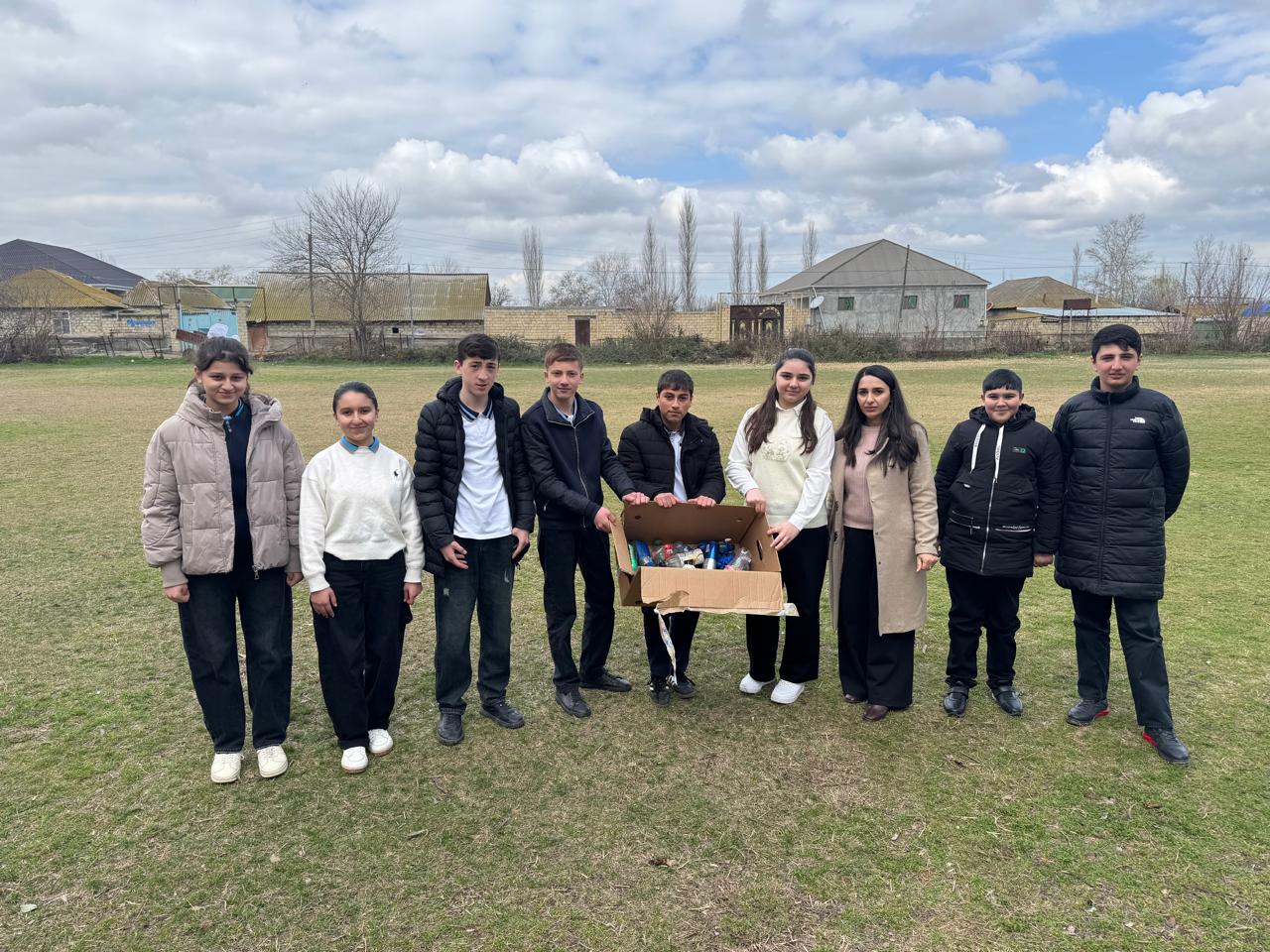


An awareness training on “The Impact of Plastic Waste and Microplastics on the Aquatic Environment” was organized at Tanrigulular Village Secondary School named after M. Karimova in the Yevlakh district. The event was attended by school students and delivered by Sabina Ibrahimova, a lecturer from the Department of Physics and Ecology at Mingachevir State University.
During the training, participants were provided with comprehensive information about the negative impacts of plastic waste on the environment, particularly on water bodies, the formation mechanism of microplastics, and their effects on ecosystems. In her presentation, Sabina Ibrahimova explained in detail the decomposition period of plastic waste in nature, the threats it poses to marine and ocean life, and the harmful effects of microplastics on human health through the food chain, using visual materials and factual evidence.
It was particularly emphasized that the Caspian Sea, being a closed water basin, retains plastic waste that enters it for long periods, leading to various ecological problems. Plastic bottles and bags discarded along coastal areas gradually break down under the influence of sunlight and waves, forming microplastic particles. These particles pose a serious threat to endemic species of the Caspian Sea, including the Caspian seals and sturgeon fish.
It was also highlighted that the Kura River, one of Azerbaijan’s main freshwater resources, is a transboundary river and carries plastic waste from neighboring countries into the territory of Azerbaijan. Research has shown the presence of microscopic plastic fibers in the water of the Kura River, which can affect agricultural irrigation systems and indirectly impact drinking water sources.
During the training, it was explained that plastic waste forming a layer on the water surface prevents the water from being enriched with oxygen. This leads to the destruction of underwater vegetation and causes oxygen deficiency for fish. It was also noted that plastic waste accumulated in the coastal zones of Azerbaijan’s national parks, such as Gizilaghaj National Park, poses a threat to water birds by entangling their legs and restricting their movement.
Students were informed that plastic pollution is not only a problem of distant oceans but also a pressing issue for regional water bodies such as the Caspian Sea, the Kura, and the Araz rivers. It was explained that a plastic item thrown on the shore may return years later in the form of microplastics through fish products or even drinking water. This represents not only an environmental issue but also a serious public health concern.
Within the training, it was also noted that the sale and use of plastic bags with a thickness of up to 15 microns have been legally banned in Azerbaijan. Students were encouraged to comply with national environmental regulations and adopt responsible environmental behavior.
As part of the practical component of the event, students participated in a plastic waste collection activity in the schoolyard. The collected waste once again demonstrated the importance of individual responsibility in protecting the environment.
It should be noted that the main objective of such awareness activities is to strengthen ecological responsibility among the younger generation, promote a “zero waste” culture, and expand public initiatives aimed at environmental protection. At the end of the training, discussions were held with participants, questions were answered, and it was emphasized that reducing plastic waste is essential for protecting aquatic ecosystems, ensuring food safety, and securing a healthy environment for future generations.