


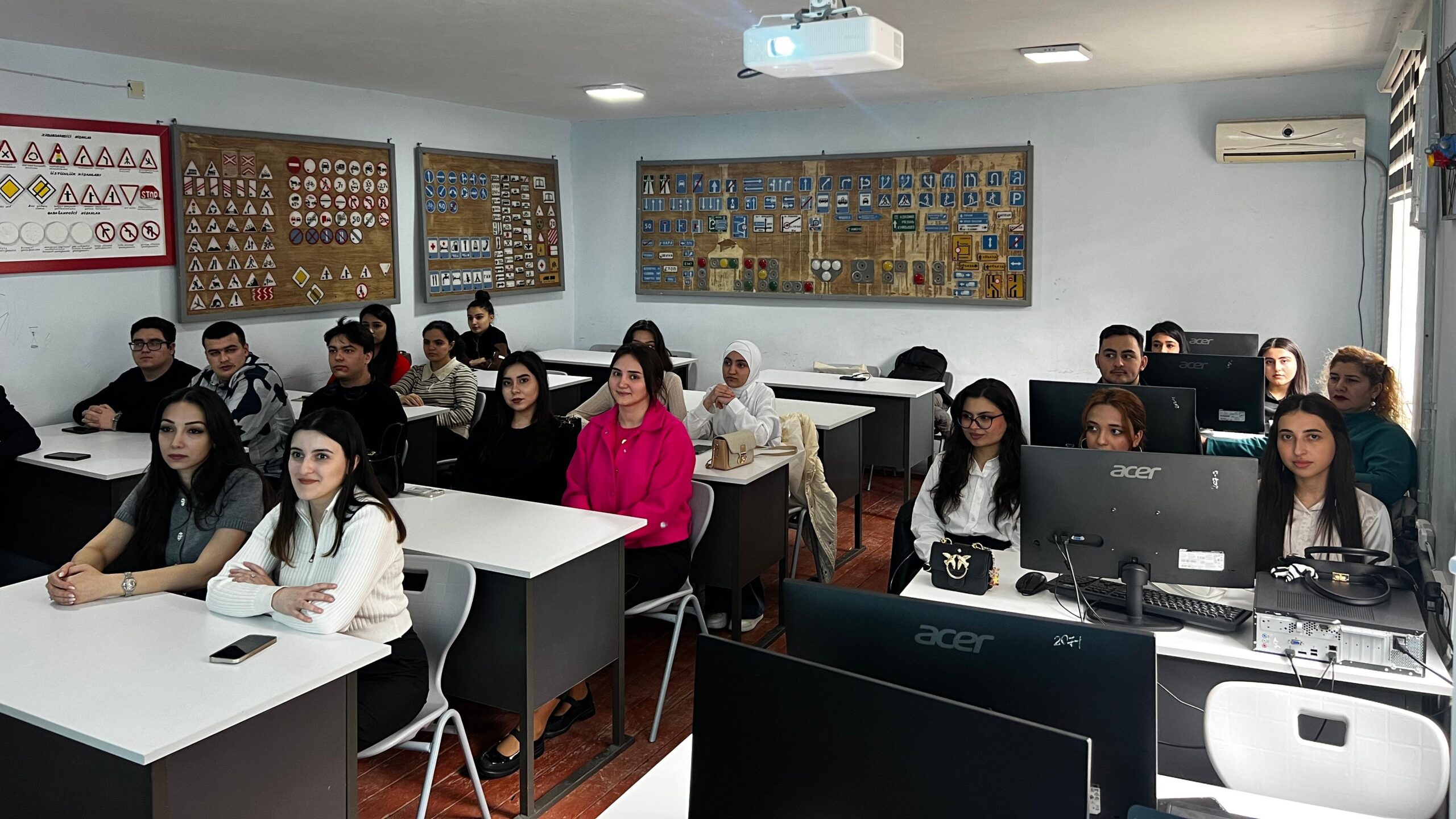




An “Eco Water Conservation Hackathon” has been organized at Mingachevir State University with the aim of protecting water resources, strengthening environmental sustainability, and promoting efficient resource use.
The hackathon, jointly initiated by the Department of Physics and Ecology and the Lifelong Learning School, stood out as an important platform fostering eco-innovation within the university.
The main objective of the event was to create opportunities for developing innovative and applicable solutions to pressing issues such as water scarcity, inefficient usage, and resource loss. Participants worked on projects related to optimizing water consumption in urban and rural areas, monitoring water losses, improving drip irrigation systems in agriculture, developing smart sensor-based water management models, and designing awareness mechanisms aimed at behavioral change.
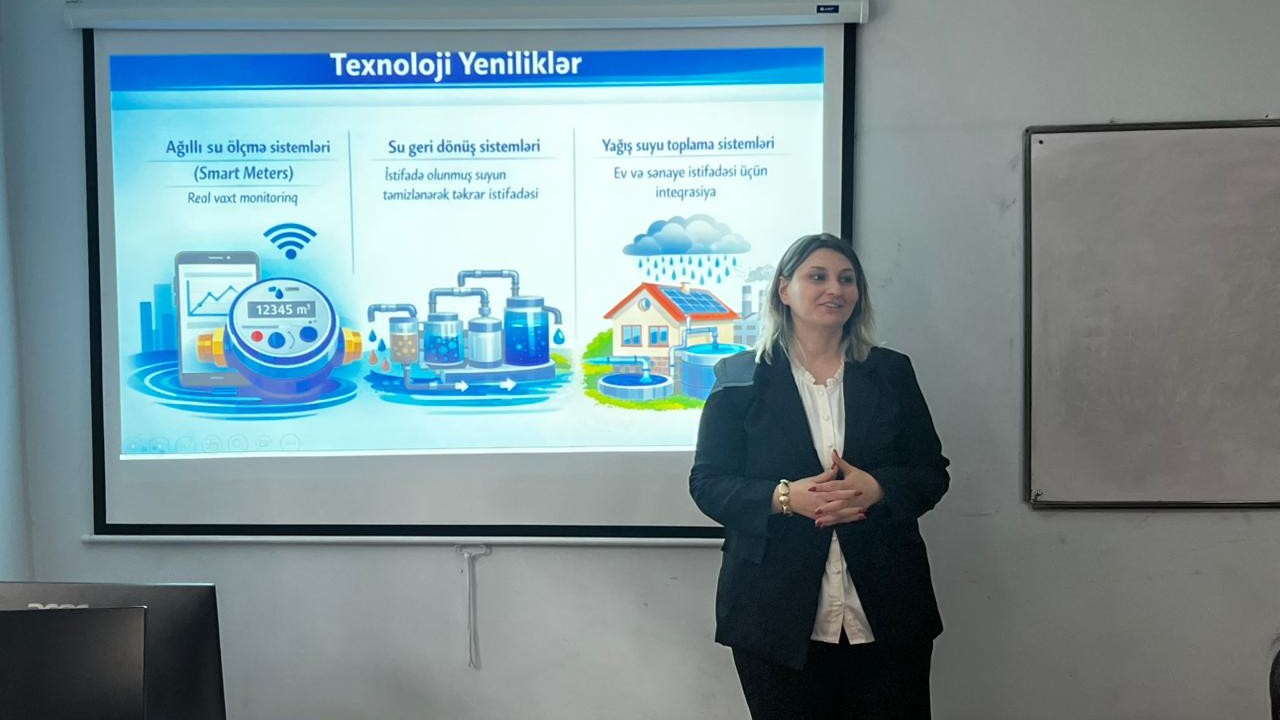
During the event, teams approached environmental challenges through a multidimensional perspective, considering both technological and social factors. This enabled the development of more realistic, sustainable, and scalable solutions for water conservation. Participants proposed concepts such as water reuse, rainwater harvesting, and digital monitoring systems.
Throughout the hackathon, intensive teamwork, rapid idea development, and prototyping processes were carried out. Within a short time, participants structured their initial ideas and transformed them into presentation-ready project models, contributing to the development of their analytical thinking, systems approach, and engineering skills.
At the final stage, teams presented their projects to the jury panel. The evaluation was based on criteria such as innovation, environmental impact, applicability, economic efficiency, and long-term sustainability. Projects with high practical potential were selected and provided with recommendations for further development.
The “Eco Water Conservation Hackathon” has been recognized as an important initiative contributing to the formation of environmental responsibility culture at the university, the development of innovative thinking in water conservation, and the strengthening of students’ solution-oriented approaches to real-world challenges.