

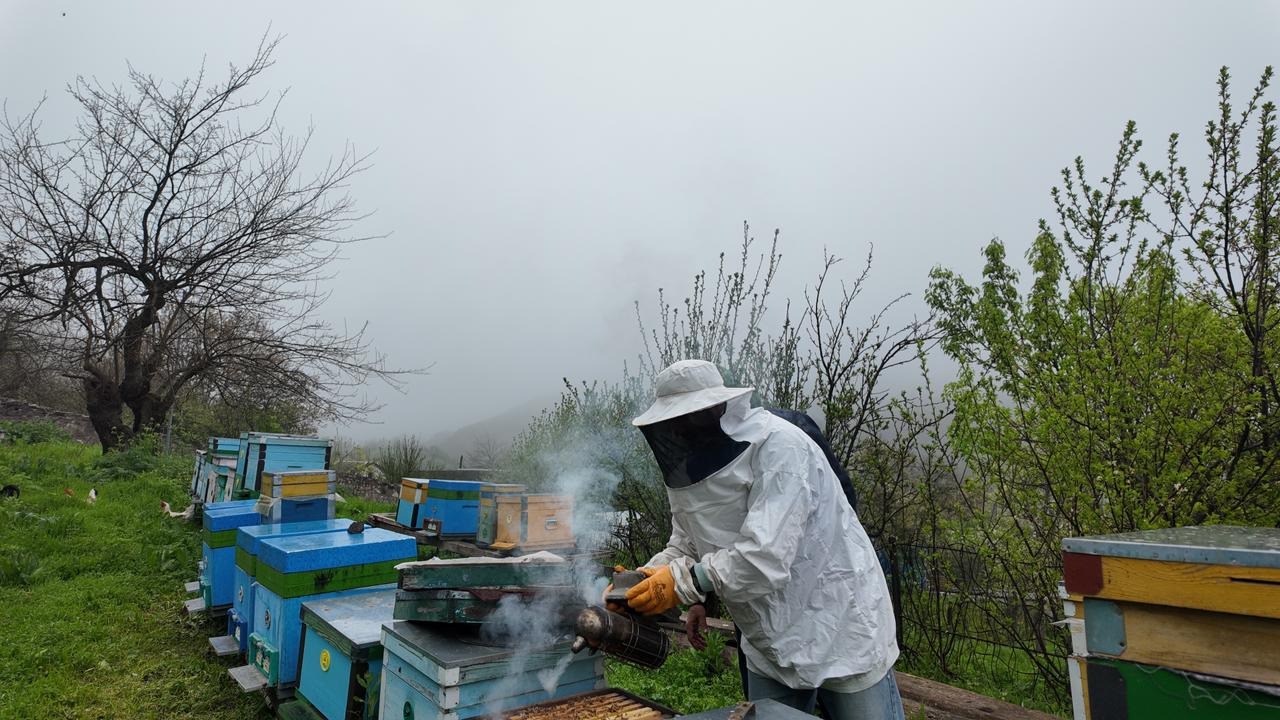
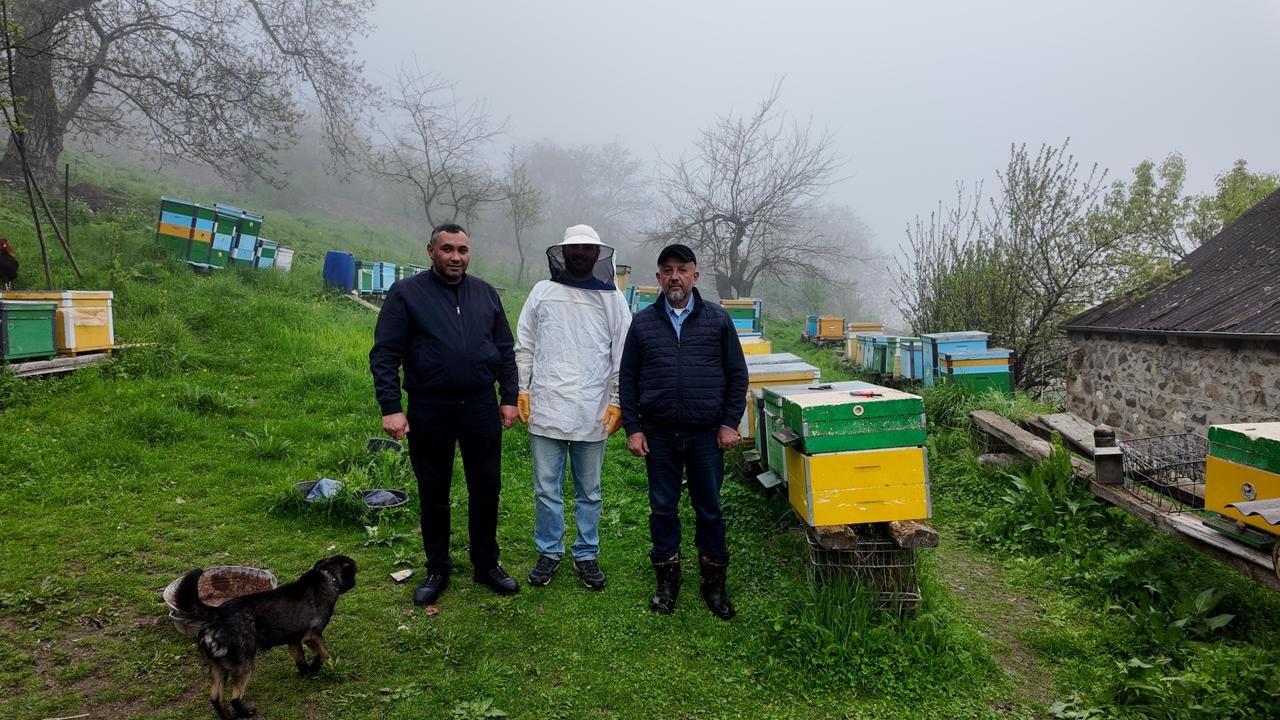
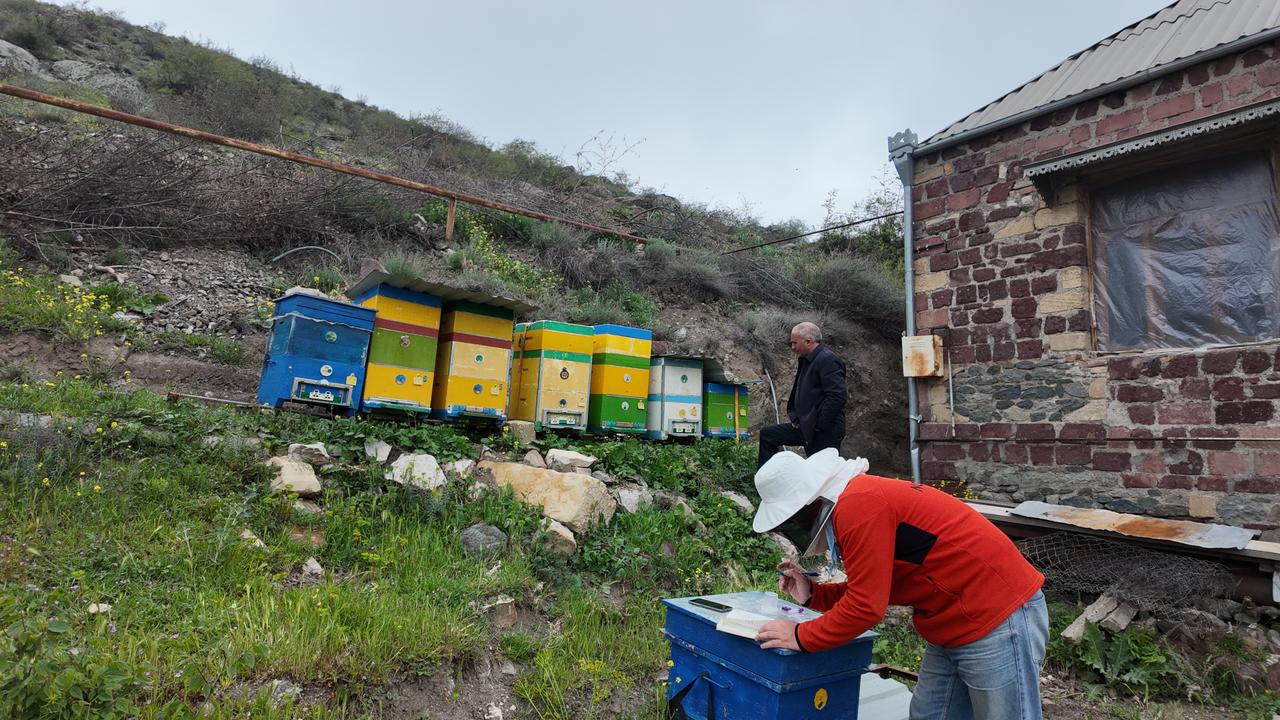
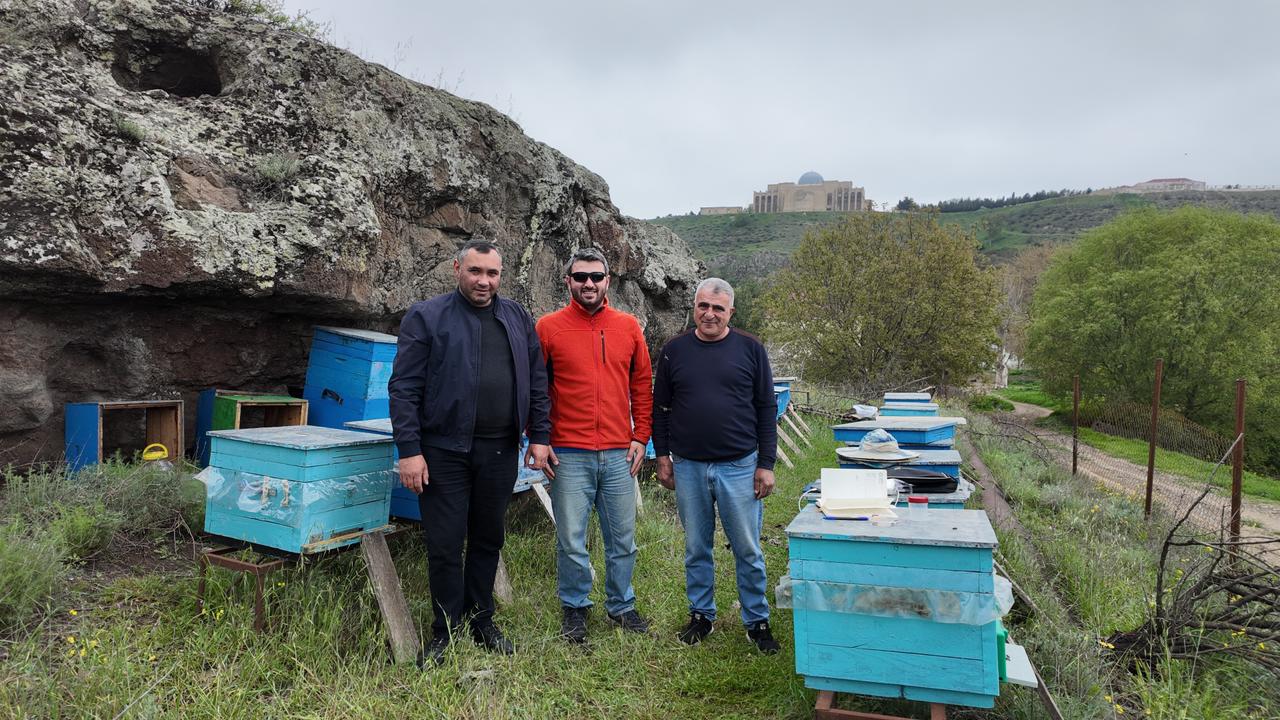
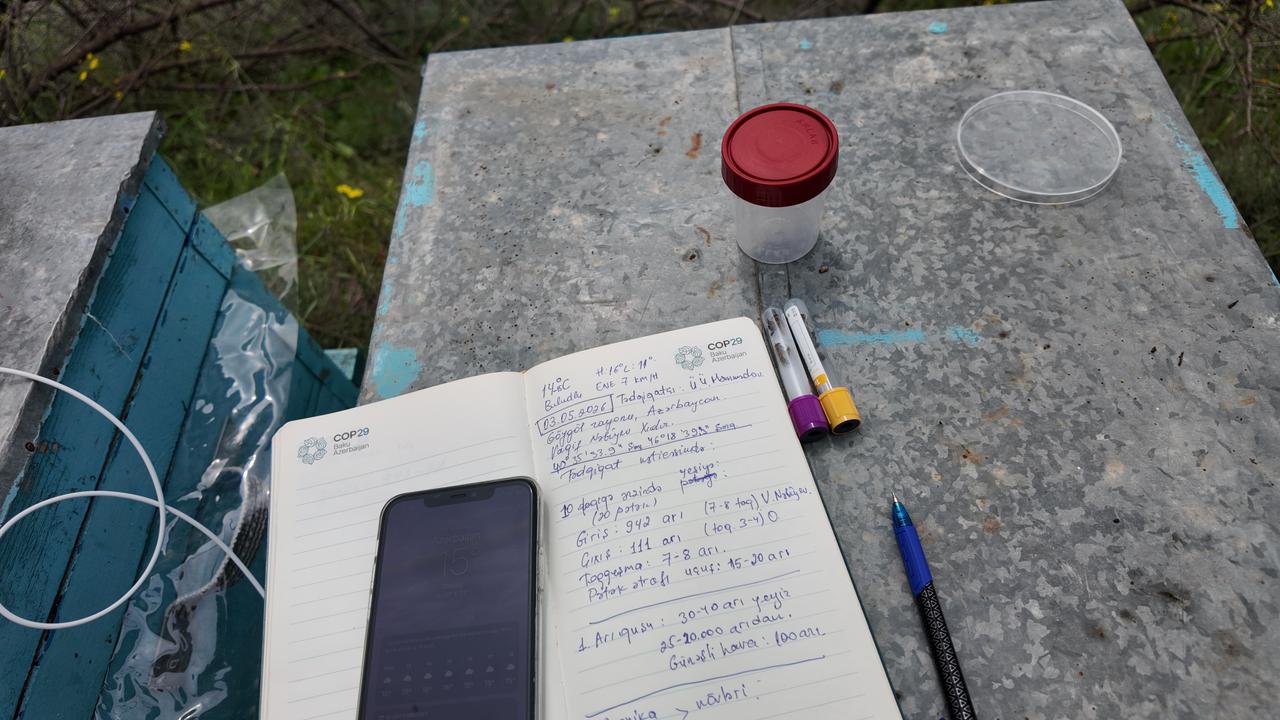
Field research based on biomimicry and artificial intelligence approaches has been conducted across various regions of Azerbaijan within the framework of the master’s thesis of Mingachevir State University (MDU) graduate student Ulvi Mammadov. The study, titled “Sustainable Optimization in Aerospace Systems and Green Economy Prospects through Modeling the Instinctive Behavior of Bees Based on Biomimicry and Artificial Intelligence,” was carried out in Bayan village of the Dashkasan district, as well as in the Uchtepe and Topalhasanli villages of the Goygol district.
The main objective of the research was to analyze the behavioral mechanisms of bee colonies and identify opportunities for applying the principles of these natural systems in artificial intelligence models. During field observations, key behavioral patterns such as hive entry–exit intensity, foraging activity, collective coordination, and decision-making processes were systematically analyzed. In addition, environmental factors—including ultraviolet (UV) radiation, temperature, humidity, and wind—were comprehensively assessed in terms of their impact on bee activity levels.
The findings indicate that changes in climate and weather conditions directly influence the behavioral dynamics of bees, shaping both their activity intensity and collective coordination levels. These results further confirm that adaptive and self-regulating mechanisms observed in natural systems hold significant potential for technological applications.
The scientific outcomes substantiate the feasibility of utilizing bees’ instinctive behaviors within artificial intelligence models through a biomimicry approach. In particular, bees’ capabilities in collective decision-making, optimal resource allocation, and adaptation to dynamic environments are considered promising models for solving optimization problems in aerospace systems. This approach also contributes to the development of innovative solutions aligned with green economy principles, including enhanced resource efficiency, energy savings, and environmental sustainability.
It should be noted that the thesis is being jointly conducted by the Dean of the Faculty of Economics and Management, Associate Professor Nushaba Gadimli, and graduate student Ulvi Mammadov, with the intention of transforming the research results into applied, practice-oriented projects in the future.